
Can You Patent a Cosmetic Formula? What Brands Should Prepare Before Filing
Quick answer
- A cosmetic formula can be patentable in the US, but not every formula qualifies; a registered patent practitioner must assess the specific records.
- The review turns on whether the invention works, is clearly described, is new and is non-obvious—not simply on an unusual INCI list or a trending active.
- Prepare version-controlled formulas, process conditions, development and contributor logs, existing results, known gaps and disclosure records before the review.
- Patentability, freedom to operate and cosmetic-market compliance are separate questions; paying for development does not by itself establish inventorship, ownership or a right to apply.
- Raise disclosure questions with the practitioner before sharing the formula more widely.
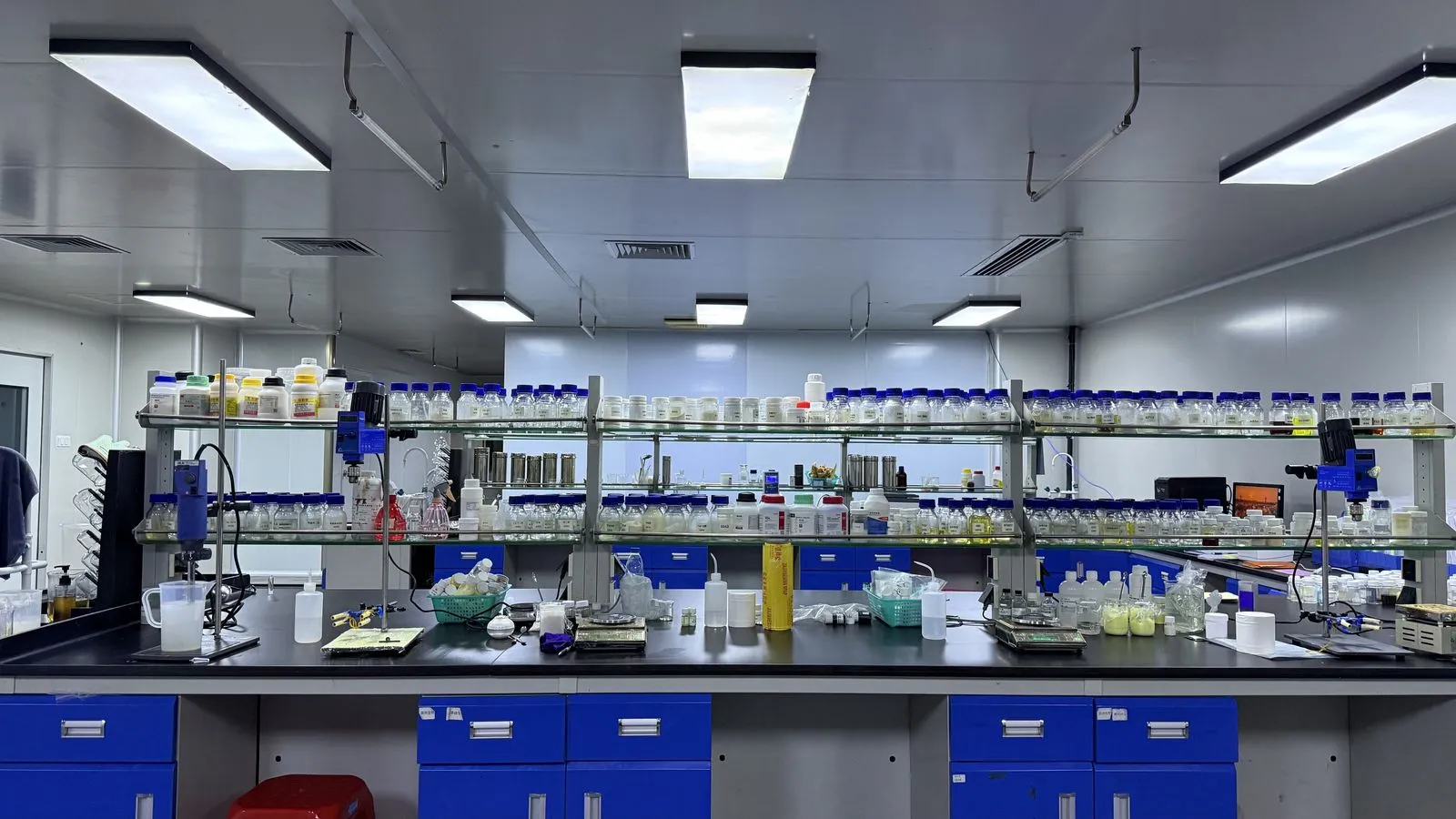

Yes, a cosmetic formula can be the subject of a patent, but not every formula qualifies. A US utility patent can cover a new and useful "composition of matter", which is the category a formulated product falls into (USPTO, Patent essentials). Whether a particular formula could support a cosmetic patent is a judgement for a registered patent practitioner who has seen the records, not for a brand, a manufacturer or a blog post.
This guide covers the part a brand can control: understanding the basic US conditions well enough to recognise when a project might be worth a professional review, and preparing the development records that review will need. It does not assess any formula, and it does not explain how to file.
Scope of this guide. It describes US patent basics as presented by the USPTO, for general education. It is not legal advice, it does not cover other countries, and it does not cover filing procedure, timing, fees or strategy. Whether a formula is patentable, whether a product can be sold without infringing someone else's patent, and whether it complies with cosmetics rules in a market are three separate questions for three kinds of specialist.
What the USPTO says a patent requires
The USPTO lists four conditions an invention must meet before a patent is issued (USPTO, Patent essentials). In plain terms for a formulation team:
- It works. The USPTO's wording is that the invention must be able to be used and "cannot just be a theory". For a formulation project, identify the intended use and the technical basis for it. Supply the development evidence already available and clearly mark any work that has not been performed. A patent practitioner should assess whether the requirement is met; this guide does not impose a requirement to have already manufactured a sample.
- It is clearly described. The application has to explain how to make and use the invention. For a formula, that depends on composition and process details being recorded precisely enough to describe.
- It is new. Something not done before. A practitioner considers what has already been disclosed or is otherwise known, rather than how new the product seems to the brand. Bring the relevant earlier material to the review and let the practitioner assess its significance.
- It is not obvious. The change from what already exists must not be an obvious one. Whether a particular change is obvious is a legal judgement; a practitioner will look at how the formula differs from what is already known, and why.
The same page notes that laws of nature, physical phenomena, abstract ideas, and "only an idea or suggestion" cannot be patented. A product concept, a target claim or a brief is not an invention on its own.
Several things that feel new to a brand are not the same as meeting these conditions:
- A new pack or dispenser. Packaging can sometimes be protected in its own right, for example by a design patent for an ornamental design, but that protects the article's appearance, not the formula inside it.
- A new INCI combination. A list of ingredients that no competitor uses in exactly that order is not evidence of novelty or non-obviousness. What matters is whether the composition, and what it does, differs meaningfully from what is already known.
- A trending active. Using a popular active, or choosing a level recommended by its supplier, does not by itself establish that the finished composition meets the patent requirements.
- Paying for development. Funding a project does not make the funder an inventor or make the result patentable. That point is covered below.
None of this means a brand's formula cannot qualify. It means the question is about the technical facts of the composition and what is already known, which is why records matter more than marketing language.
Why the records come before the patent conversation
A patent practitioner reviewing a possible cosmetic formula patent will want to understand what was invented, by whom, when, and how it differs from what already exists. Almost all of that sits in development records, not in a product brief or a launch deck. If the records are scattered across email threads, sample labels and a chemist's memory, the review starts with reconstruction rather than assessment.
The records also have value whether or not a patent is ever pursued. They support formula transfer, change control and any later question about who did what. Our guide to cosmetic formulation explains how a manufacturing formula differs from an ingredient list, which is the level of detail these records need.
Planning a custom formula development project?
Tell us which development records your project needs so we can confirm the technical scope and documentation available.
Discuss my development brief →The pre-review evidence pack
The list below is a working pack a brand can ask its development partner to help assemble. It is not a USPTO form or a list of filing requirements; the practitioner will say what they actually need. Agree who may receive confidential records, what can be shared and under which terms before exchanging full compositions or process details. The record request does not assume that a brand is entitled to a development partner's background formulas or proprietary know-how.
| Record | What it contains | Why it helps the review |
|---|---|---|
| Formula versions | Each version with a unique reference, full composition and percentages, and raw material grades | Shows exactly which composition is under discussion and how it evolved |
| Development log | Date of each trial, who ran it, what changed and why | Supports questions about who contributed to the invention and when |
| Contributor record | Names, roles and organisations of everyone who proposed or tested a technical change | Helps the practitioner identify possible inventors, who are not always the people who expect to be named |
| Background material already known to the team | Supplier technical data, published papers, competitor products or earlier formulas the team used as a starting point | Gives the practitioner a starting point for comparing the formula with what already exists |
| Comparison samples and controls | Which versions or reference products the formula was compared against, and on what basis | A difference is only meaningful against a defined comparison |
| Process conditions | Order of addition, temperatures, mixing, pH adjustment and any step the result depends on | The description has to let a skilled reader make the invention; process can matter as much as composition |
| Existing results | Stability, sensory, laboratory or other study results already in hand, with the version they relate to | Shows what the formula has actually been observed to do |
| Known gaps | Results that do not yet exist, or that exist only for an earlier version | Stops the team from describing more than the evidence shows |
| Disclosure record | Who outside the team has seen the formula or results, when, and under what confidentiality terms | Lets the practitioner assess what has been made available to others |
Three habits make the pack far more useful. Tie every result to a formula version. Results for version 3 cannot automatically be treated as evidence for version 7; record what changed so the relevant technical and patent reviewers can assess the difference. Record contributions at the time, not after the fact. And keep the known-gaps entry honest; a practitioner can plan around missing data, but not around data that turns out to describe a different formula.
The disclosure record deserves particular care. Sharing a formula with prospective buyers, distributors, investors or other suppliers may matter to a later review. This guide does not set out how disclosure affects patent rights. Raise it with the practitioner early, before the formula is shared more widely, and let them advise.
Inventor, applicant, paying brand and owner are different roles
Brands often assume that the company that commissioned and paid for a formula is automatically the inventor and the owner of any patent. US patent basics separate these roles.
- Inventor. The person or people who contributed to the invention itself. The USPTO states that someone who only contributes money, and is not an inventor, cannot be named as an inventor (USPTO, Patent essentials).
- Applicant. The inventor may apply, and so may a person or company to whom the inventor has assigned the invention, or is contractually obliged to assign it. A company should have its practitioner establish the basis on which it would apply rather than assume payment gives it that right.
- Paying brand. Payment for development is a commercial fact. On its own it does not create inventorship or a right to apply.
- Owner. Ownership is distinct from inventorship. Have the practitioner check who holds the relevant rights, including any assignments, joint ownership or licences (USPTO, Managing a patent).
In an ODM project the formulators who make the technical contributions are often employed by the manufacturer, while the brand defines the brief and pays. Who ends up entitled to apply, and who owns the result, therefore depends on the agreements between the parties. Buying a formula, or paying for its development, does not automatically give the buyer a patent or the right to apply for one. Our cosmetic manufacturing agreement guide covers formula ownership, licences and exclusivity clauses; agree those before development starts, and have the patent practitioner review them alongside the records.
A patent, a confidential formula, a trademark and a pack design protect different things
The USPTO notes that patents, trademarks, copyrights and trade secrets are different types of intellectual property (USPTO, Patent essentials). For a cosmetic product they map roughly like this:
| Protection | What it is aimed at | What it does not do |
|---|---|---|
| Utility patent | A new, useful, non-obvious composition or process, as described and claimed in the patent | Protect the brand name, the pack's look, or anything outside its claims |
| Confidential formula or trade secret | The formula and know-how kept from others | Confidentiality alone does not establish legal trade-secret protection; the conditions and disclosure plan need professional review |
| Trademark | The brand name, logo or other brand identifiers | Protect the formula or its technical function |
| Design patent | A new, original, ornamental design for an article, such as a container shape | Protect the formula inside or the brand name |
These routes can sit side by side, but they are not interchangeable, and choosing between them for a formula is a strategic question. This guide does not offer a view on it; raise it with the practitioner, together with how the formula is currently kept confidential.
Patentability, freedom to operate and cosmetics compliance are three questions
A US patent gives its owner a right to stop others from making, using, offering for sale, selling or importing the invention. The USPTO is explicit that it does not grant a right to make or sell the invention itself: the owner's ability to do so "depends on the rights of others" and on applicable laws (USPTO, Managing a patent).
For a brand, that separates three questions:
- Patentability. Could this formula meet the conditions for a patent? A patent practitioner assesses this.
- Freedom to operate. Could making and selling this product infringe a patent someone else holds? That is a separate analysis by a qualified patent professional, and having your own patent does not answer it.
- Market compliance. Can this product be sold in a given market under its cosmetics rules, with its labelling and claims? A regulatory specialist handles this. A patent is not a product approval.
This guide gives no opinion on any of the three for any formula. The USPTO also points out that "patent pending" has no legal effect and that patent protection starts only when a patent is granted; marking a product as patented when it is not is unlawful (USPTO, Managing a patent). Any patent wording on packaging or a website should be checked by the practitioner before it is used.
Illustrative example: organising records for an active serum project
The following is an illustrative example, not a client project. No results, values or patent outcomes are implied.
A brand works with an ODM partner on a leave-on serum. Over several rounds, the partner's formulators try a different way of combining two actives with a stabilising system, and the brand's product team believes the final version holds up better than earlier ones. Before deciding whether to speak to a patent practitioner, the brand asks for the records to be assembled. The first pass shows:
- Formula versions: five versions exist, but two were labelled only by date on sample bottles, with no reference linking them to a composition sheet.
- Development log: trial dates are recorded, but the reason for the change in the stabilising system is not written down.
- Contributors: the log names the partner's lead formulator but not the colleague who proposed the process change, or the brand's technical manager who suggested the comparison.
- Background material: supplier data for both actives is on file, but the team has not listed the published sources or existing products it looked at.
- Comparison: the "holds up better" view comes from informal observation against version 2, with no defined comparison or storage condition.
- Existing results: stability data exists for version 3, not for the final version 5.
- Disclosure: version 5 samples were sent to a distributor without a confidentiality agreement on file.
The brand contacts a patent practitioner promptly with the disclosure record and the information already available, and asks for guidance on any further sharing. It does not wait for every gap to be resolved before arranging that review. In parallel, the team assigns references to the versions and composition sheets, records contributors and the reasons for each change, lists the background material and comparison limits, and marks the stability gap against version 5. The practitioner can then identify which missing information matters for their assessment. No patent outcome follows from this example; its result is a clearer development record and a timely professional review.
A handover checklist for your development partner
Use this list when you ask an ODM or development partner what records they can provide for a specific project. What a partner can supply should be agreed project by project and written into the development agreement.
- Every formula version, with a unique reference and full composition
- A dated development log showing what changed in each trial and why
- The names and roles of everyone who proposed or tested a technical change, on both sides
- Process conditions for the version under discussion
- Supplier technical documents for the key raw materials
- Results already in hand, each tied to the version tested
- A written note of results that do not yet exist
- A record of who outside the project has received samples or formula information, and under what terms
- Confirmation of who holds each record and how it will be handed over
Questions to take to a patent practitioner
Bring the evidence pack, and ask questions the practitioner can answer from it:
- Based on these records, is there anything here that could be worth a patentability assessment, and what would you need to assess it?
- Which contributors, on our side and the partner's, may need to be considered as inventors?
- Given our development agreement, who could be the applicant and who would own any patent? Do the agreements need changing?
- What should we do, or stop doing, about sharing samples and formula information while you review this?
- Which gaps in the records or results matter most to you?
- Should freedom-to-operate be looked at separately, and by whom?
- How should we describe the project in marketing until you have advised?
Does a US patent protect our product in other markets?
The USPTO states that US patents are effective only within the US and its territories and possessions. Protection elsewhere is a separate question for a practitioner.
Bringing a development project to us
If you are developing a formula that you think may be technically distinctive, say so in the first brief for ODM development. That lets both sides plan version references, development logs and contributor records from the start, rather than reconstructing them later. Which development records we can provide, and how they are handed over, is confirmed for each project. Work with your registered patent practitioner on patentability, searches, filing and third-party rights. A development brief with us is a technical planning step; it provides no legal assessment and implies neither patentability nor a patent grant.
When you are ready, send your formula development brief and tell us which records you will need.
Ready to Start Your Project?
Tell us your product requirements. Within 24 hours, our technical team will reply with a quotation or the questions needed to prepare one.