
Toner vs Essence vs Serum: Differences, Order & Formulation
Quick answer
- Toner, essence and serum are overlapping leave-on product names, not regulated concentration grades. A toner is often water-thin and used after cleansing; an essence often adds a light conditioning layer; a serum is usually positioned around a more specific concern.
- If all three formulas are compatible, the common order is toner, essence, serum, then moisturizer. Product directions and the active system take priority over the category name.
- For a brand, choose by the job the SKU must own, the texture and dispenser it needs, and the claim evidence it can support. Do not launch three products that repeat the same hydration story.
The practical difference between toner, essence and serum is the job each formula is designed to do, not a universal concentration ladder. Toner is often the lightest post-cleansing step, essence commonly adds a conditioning or hydration layer, and serum is usually positioned around a more specific concern. Modern products overlap, so read the formula, directions, texture and claims instead of assuming the name proves strength. For brands, the same rule prevents three nearly identical products from competing inside one range.
Toner vs Essence vs Serum at a Glance
This table describes common market positioning, not legal definitions. Any one formula can sit outside the pattern. A hydrating toner may resemble an essence; an active-led essence may resemble a serum; and a fluid serum may be thinner than either.
| Decision point | Toner | Essence | Serum |
|---|---|---|---|
| Common job | Light hydration, soothing, oil-control positioning or exfoliation after cleansing | Light conditioning or hydration, often built for layering | A more specific cosmetic goal such as hydration, visible brightness, smoother-looking texture or firmness |
| Typical texture | Water-thin to milky | Water-thin to lightly viscous | Fluid, gel, light emulsion or oil |
| Formula clue | May be a simple humectant system, a botanical-water story or an exfoliating system | Often combines humectants and conditioning ingredients in a light base | Often organizes the formula and claim story around selected actives, but the name does not guarantee a higher percentage |
| Common pack | Pour bottle, reducer, flip cap or compatible fine-mist pump | Pour bottle, controlled-orifice cap or pump depending on flow | Dropper, pump or airless pack selected for the actual formula |
| Common order | First after cleansing | After toner when both are used | After toner or essence, before moisturizer |
| Brand role | Entry step, refresh step, exfoliating step or lightweight hydration | Layering and sensory bridge between toner and treatment | Hero benefit or targeted routine step |
What Is a Toner, an Essence and a Serum?
Toner: a post-cleansing format with several possible jobs
A toner is normally a leave-on liquid used after cleansing. The old stereotype is an alcohol-heavy astringent, but the category now includes hydrating, soothing, exfoliating, oil-control and milky formulas. Some are applied with the hands, some with a pad and some through a spray pump. The appropriate method comes from the formula and directions, not from the word toner alone.
It is also too broad to say every toner is required to “rebalance pH.” Cleansing can affect skin-surface pH, and research has examined how cleanser pH and surfactant systems interact with the skin. However, research on cleansing systems also shows that pH by itself does not determine mildness. A toner may be designed around a comfortable post-cleansing feel, but that is different from claiming every person needs a separate pH-reset step.
Essence: a flexible positioning name for a light leave-on product
An essence is commonly a watery or lightly viscous leave-on step associated with hydration, comfort and layering. Ferments, humectants, niacinamide, panthenol or botanical ingredients may appear, but none is required by the category name. Some products called “essence toner,” “first essence,” “treatment lotion” or “skin” occupy almost the same space.
A treatment essence should not be confused with an essence lotion. A treatment essence is usually an aqueous or lightly thickened leave-on product. An essence lotion is a light emulsion with an oil phase and an emulsification system. It behaves more like a fluid moisturizer, so its stability, filling and packaging questions are different. Our current catalogue has an Essence Lotion category; that does not imply that each item is a separate treatment-essence SKU.
Serum: a targeted position, not proof of concentration
A serum is usually positioned around a defined cosmetic concern and a selected active story. It may be a water gel, an emulsion, an anhydrous oil or another delivery format. “Serum” does not prove that a formula contains a higher active percentage, penetrates more deeply or performs better than a toner or essence. Those conclusions require the actual ingredient grade, use level, formula, finished-product evidence and claim scope.
Brands seeking a manufacturing page rather than a comparison guide should use our face serum manufacturer guide. This article owns the comparison question; the manufacturer guide owns supplier selection, project scope and serum-specific sourcing.
Why Toner, Essence and Serum Categories Overlap
Cosmetic law controls what a product is intended to do, how it is labelled, whether it is safe and whether its claims are supportable. It does not provide a universal recipe that turns a product into a toner, essence or serum. In the United States, the FDA Cosmetics Labeling Guide requires a statement of identity and explains that intended use is determined by label and labelling statements. The guide allows an identity to use a common or usual name, a descriptive name or, when the nature is clear, a fanciful name. That leaves substantial room for market naming while keeping the intended use and claims important.
In the European Union, Regulation (EC) No 1223/2009 defines cosmetics by intended contact and purpose, while Regulation (EU) No 655/2013 requires cosmetic claims to meet common criteria including evidential support. Neither creates a concentration ladder for these three category names.
The result is a spectrum rather than three sealed boxes. The same humectant-led water base could be positioned as a hydrating toner, a first essence or a hydrating serum after changes to viscosity, claims, dosage, pack and range architecture. That does not mean names are meaningless. It means the brand must define what the name promises in its own range and make sure the formula, pack and evidence support that promise.
Toner or Serum First? The Practical Order
When compatible toner, essence and serum products are all used in one routine, the common order is:
- Cleanser
- Toner
- Essence
- Serum
- Moisturizer
- Sunscreen in the morning
This is a practical convention, not a rule that overrides product directions. An exfoliating toner is an active step rather than a neutral splash. A prescription product has its own instructions. A biphasic or oil-rich serum may sit differently from a water gel. If two layers pill, sting or repeat the same active system, removing a step may be better than forcing the order.
The familiar “thinnest to thickest” rule is useful for ordinary compatible products, but it cannot answer ingredient compatibility. Nor does applying an essence first prove that a serum will penetrate more deeply. A safe consumer explanation is modest: lighter products normally go before richer ones so they spread evenly, while the directions and active system decide the final routine.
Do You Need Toner, Essence and Serum?
No routine automatically needs all three. Start from the missing job rather than the missing category name.
| Need | Most useful starting point | What to avoid |
|---|---|---|
| Light hydration after cleansing | One hydrating toner or essence | Three humectant-led layers with no distinct role |
| A specific cosmetic goal | A serum designed around that goal, plus moisturizer as needed | Assuming the word serum proves efficacy |
| Periodic exfoliation | An appropriately directed exfoliating toner or serum | Stacking several acid or active products without a clear schedule |
| Dry-feeling skin that dislikes heavy cream | A light essence, essence lotion or fluid moisturizer according to the desired finish | Confusing treatment essence with an emulsified essence lotion |
| A simple routine | Cleanser, moisturizer and sunscreen, with one targeted step if needed | Adding categories only because a routine chart includes them |
A consumer can therefore use toner without essence, essence without toner, serum without either, or none of them. A brand should apply the same discipline to a product range. Every SKU should own a visible reason to exist.
How a Brand Should Choose Between Toner, Essence and Serum
For a private-label or ODM project, the question is not “Which name is most premium?” It is “Which position makes the product easy to understand, easy to sample and different from the rest of the range?” Work through five decisions.
- Give the SKU one main job. Decide whether it is a refreshing post-cleanse step, an exfoliating step, a light hydration layer or a targeted hero. Supporting benefits can remain, but the label and product page need one clear lead.
- Place it inside the range. Compare the proposed product with every existing toner, essence, serum and moisturizer. If two items share the same hero ingredient, texture, claim and occasion, change one of those variables or remove one SKU.
- Define the sensory promise. Specify water-thin, milky, cushiony, gel-like, quick-drying, dewy or low-tack in observable language. A reference product can communicate direction, but it is not a transferable recipe.
- Match the claim to evidence. “Hydrates,” “reduces the appearance of uneven tone” and “supports a smoother-looking texture” are different evidence questions. Agree what evidence is needed before the claim is printed.
- Select the pack with the formula. A fine mist, reducer bottle, dropper and airless pump do not dispense the same way. The final component must be assessed with the final formula.
Formula, Texture and Packaging Decisions
Texture is a measurable development target, not just a category adjective
“Watery essence” and “light serum” are not specifications. During development, the team needs an agreed sample, viscosity or flow target, application amount, spread, after-feel and packaging configuration. A formula can be acceptable in the beaker yet fail as a product because it drips through the reducer, will not spray consistently, strings from a dropper or leaves a pump unable to prime.
A toner proposed for a fine-mist pump needs a sufficiently compatible flow, no particles that obstruct the mechanism, a suitable spray pattern and evidence that the closure remains reliable. A lightly thickened essence may work better with a controlled orifice or pump. A serum needs a dispenser chosen around its flow, air sensitivity, dose and user experience. See our guide to packaging compatibility testing for pumps, droppers and airless bottles for the evidence a buyer should request.
Ingredient lists do not reveal active level or finished-product performance
Toner, essence and serum can share glycerin, hyaluronic acid, niacinamide, panthenol, botanical extracts or peptides. The ingredient list shows what is present, generally in descending order until the rules allow lower-level ingredients to be listed in any order. It does not disclose every concentration, raw-material grade, molecular weight, solvent system or test result.
For a brand brief, name the desired consumer result and target market before prescribing a percentage copied from another product. The formulator then has a reason to choose a grade, supporting system and use level. Our skincare ingredients guide explains why ingredient identity, formula context and finished-product evidence are separate questions.
Preservation, stability and compatibility belong to the finished formula
Most toner, treatment essence and water-based serum formats require a preservation strategy appropriate to the formula, packaging and intended use. A narrow neck, spray pump or dropper changes use conditions but does not eliminate the need to assess protection. An essence lotion is an emulsion, adding structural stability and oil-phase questions to the microbiological ones.
Stability and compatibility scopes should name the exact formula and component version. If viscosity, fragrance, colour, active system, bottle resin, pump or closure changes after testing, the team should assess whether the earlier evidence still applies. “The base passed” is not enough when the commercial product is no longer that base-pack combination.
Current Toner, Serum and Essence Lotion Catalogue Formats
The ranges below are the planning bands currently shown on our skincare catalogue, not a universal promise for every custom project. Component minimums, requested testing, formula changes and destination-market work can change the final quotation and schedule.
| Catalogue group | Listed size | Listed MOQ | Listed production window | Important scope note |
|---|---|---|---|---|
| Toners & Essences | 100–200 ml | 3,000 bottles per SKU | 35–45 days | The current published SKUs in this group are toners. Confirm any treatment-essence brief separately. |
| Serum | 30–50 ml | 3,000 bottles per SKU | 45–55 days | Final active system, dispenser and testing scope remain project-specific. |
| Essence Lotion | 30–50 ml | 3,000 bottles per SKU | 45–55 days | This is a light emulsion category, not a substitute name for treatment essence. |
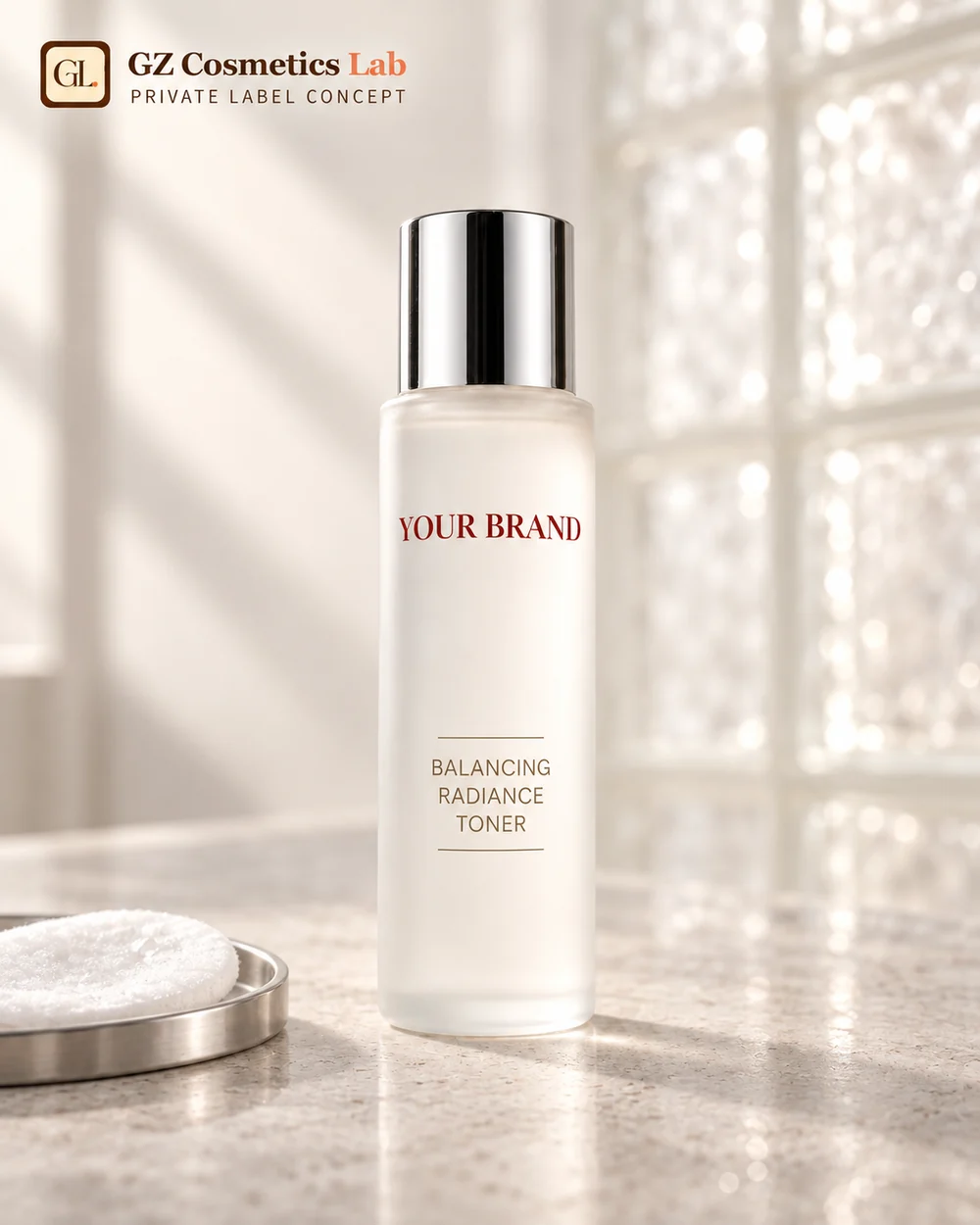
Balancing Radiance Toner
A catalogue toner reference for discussing a water-thin leave-on format and bottle configuration.
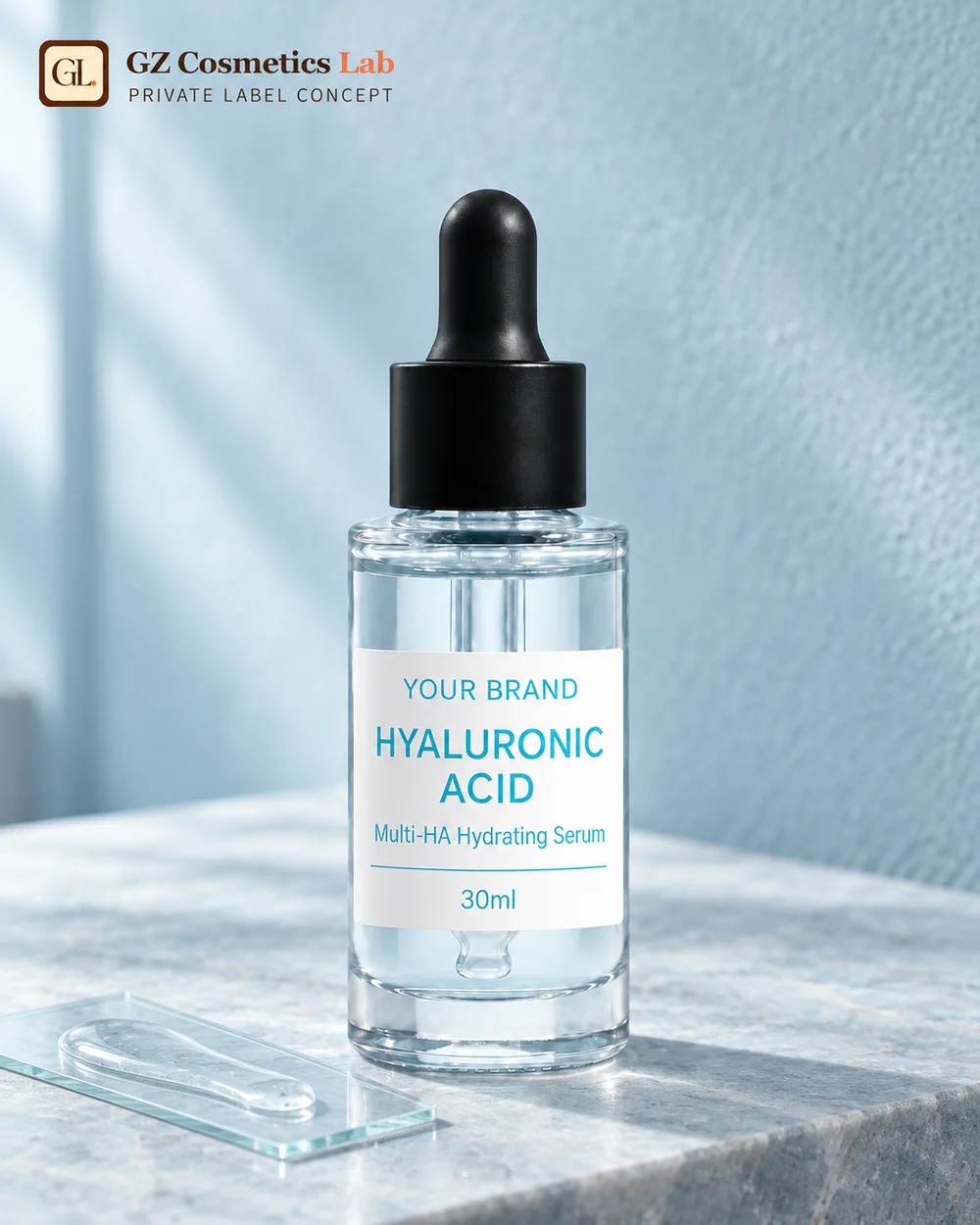
Multi-HA Hydrating Serum
A hydration-led serum reference for comparing a targeted serum position with a toner or essence.
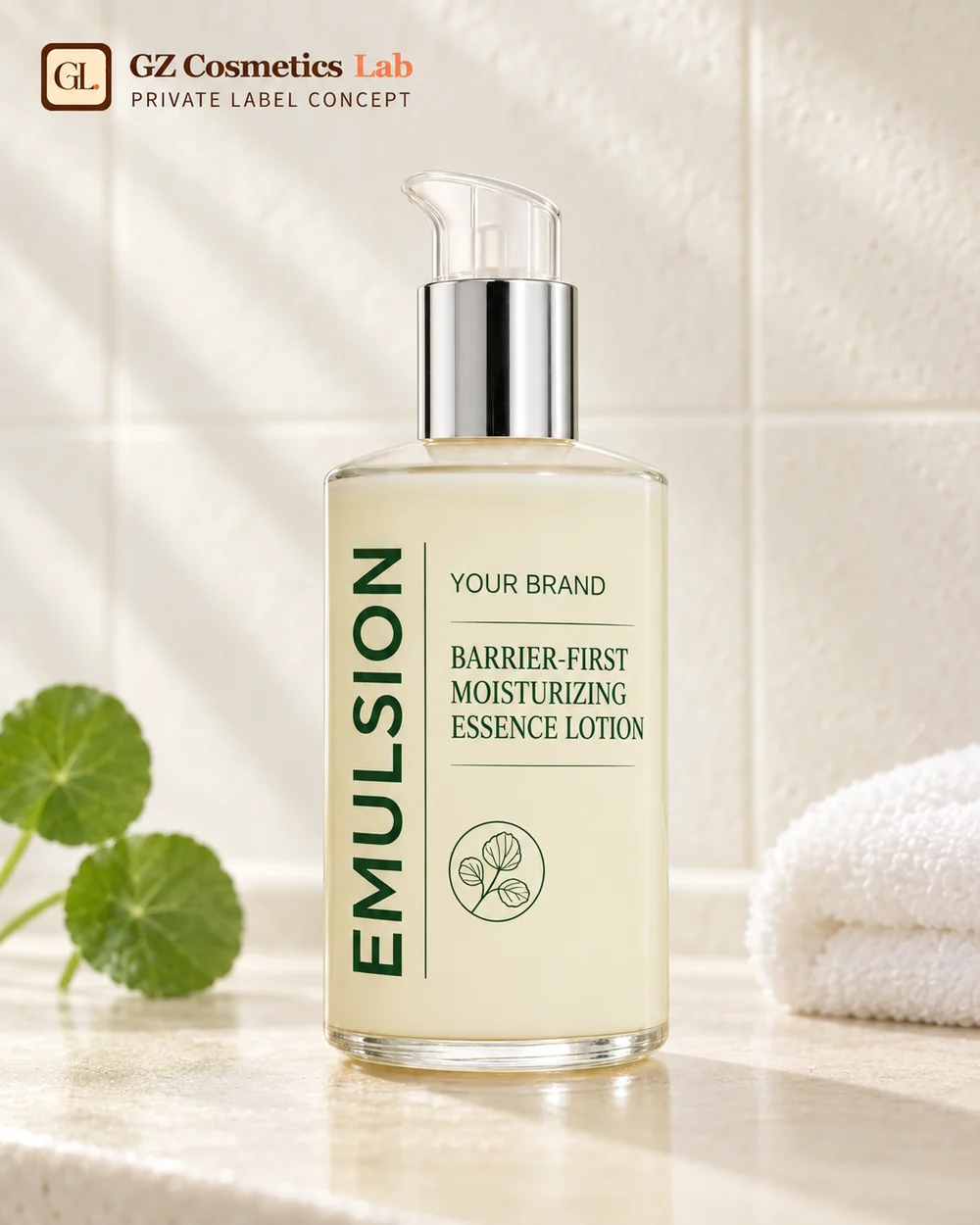
Barrier-First Essence Lotion
An emulsified essence-lotion reference. It demonstrates why essence lotion and treatment essence need separate briefs.
These images show GZ Cosmetics Lab catalogue references, not customer products or proof that every custom brief uses the same formula, pack or timeline.
How to Evaluate Toner, Essence and Serum Samples
Sample evaluation should decide whether the sample matches the brief. It does not replace safety, stability, compatibility, microbiological or claims evidence. Give each formula and component version a code, then evaluate under consistent conditions.
1. Check identity and appearance before application
- Record formula version, batch or sample code, fill date and component reference.
- Compare colour, clarity or expected opacity, odour and visible particles with the agreed description.
- Note settling, separation, air bubbles or residue around the closure without deciding the cause from appearance alone.
2. Assess dispensing and dose
- Does a toner pour or spray consistently without uncontrolled dripping or nozzle blockage?
- Does an essence leave a controlled amount through the orifice or pump?
- Does a serum dropper, pump or airless pack deliver a repeatable usable dose and remain clean at the opening?
3. Use a shared sensory vocabulary
Record spread, slip, absorption time, tack, residue, pilling and finish. “Feels premium” cannot guide a revision. “Tack remains after five minutes under the proposed moisturizer” tells the developer what to investigate. Use the intended application amount and compare samples in the same order or rotate the order between assessors.
4. Test the range, not only each bottle
If the brand plans toner, essence and serum together, layer the final candidates in the intended routine. Look for redundant feel, pilling, excessive tack and unclear benefit separation. A good individual sample can still be the wrong SKU for the range.
5. Keep preference separate from technical release
A sample can win a sensory review and still need technical work. The agreed evidence plan may include stability, packaging compatibility, microbiological assessment, safety substantiation or claim support. Record which evidence exists, which remains in progress and which commercial version it covers.
A Toner, Essence or Serum Brief for an OEM/ODM
A useful brief reduces quotation gaps and prevents the developer from guessing what “premium essence” means. Include:
- Target market and sales channel. Regulations, language, climate, retail format and claims expectations affect the project.
- One-sentence product role. State the job this SKU owns and how it differs from the other leave-on products in the range.
- Target user and routine position. Explain what comes before and after it, and whether it must layer with specific products.
- Texture and finish. Use observable terms plus one or two references, identifying what you like about each reference.
- Requested and excluded ingredients. Give the commercial reason, target market or claim behind each request rather than only a percentage.
- Claims and evidence. List intended cosmetic claims and the evidence or tests you expect to receive.
- Pack and fill size. Name bottle material, closure or dispenser direction, decoration and outer pack, while leaving final compatibility subject to review.
- Quantity per SKU and number of variants. Do not combine several fragrances or claims into one assumed MOQ.
- Sample acceptance criteria. Define appearance, dispensing, sensory and layering checkpoints before the first sample arrives.
- Timeline and documents. Separate sample preparation, revision, testing, bulk production and shipping rather than asking for one undifferentiated lead time.
If you need a developer to build from this brief, our ODM service explains the development route. When the choices above are ready, send them through the project quotation form. The team can then confirm whether an existing formula, an adapted base or custom development is the appropriate starting point.
Frequently Asked Questions
What is the main difference between toner and essence?
Toner commonly describes a light post-cleansing step that may hydrate, soothe, exfoliate or support an oil-control position. Essence commonly describes a light conditioning or hydration layer. The two categories overlap, so compare the formula, directions, texture and claims rather than assuming the name creates a fixed difference.
What is the difference between toner, essence and serum?
Toner is often the lightest post-cleansing product, essence often adds a layering or hydration role, and serum is usually positioned around a more specific cosmetic concern. None of these names guarantees concentration, penetration or efficacy. The actual formula and evidence decide what the product can claim.
Does toner or serum go first?
For ordinary compatible leave-on products, toner usually goes before serum. When an essence is included, the common order is toner, essence, serum, then moisturizer. Follow the product directions and any professional or prescription instructions instead of forcing a general order.
Can essence replace toner?
Yes, when the essence performs the function you wanted from the toner, such as light hydration. It may not replace an exfoliating or otherwise specifically directed toner. Keeping both makes sense only when they have clearly different jobs and layer comfortably.
Can serum replace essence?
A hydrating serum may make a separate essence unnecessary. An essence can still have a useful place when the brand wants a distinct light-conditioning step, sensory experience or range story. The decision should be based on product roles rather than a belief that more layers are automatically better.
Is an essence lotion the same as a treatment essence?
No. A treatment essence is usually aqueous or lightly thickened. An essence lotion is normally a light emulsion containing an oil phase and emulsification system. It needs emulsion stability and pack decisions that do not automatically apply to a watery treatment essence.
Does serum always contain more active ingredients?
No. “Serum” is a market category, not a concentration guarantee. A toner or essence can contain meaningful actives, while a serum may be a simple hydration gel. Ask for the raw-material grade, use level basis, formula context and finished-product evidence relevant to the intended claim.
Which format is best for a new private-label range?
Choose the format that owns the clearest missing job. A toner can create an accessible first step, an essence can add a light layering position, and a serum can carry the hero benefit. For a small launch, one differentiated leave-on product is often easier to explain and support than three overlapping SKUs.
How should a brand prevent toner, essence and serum from competing with each other?
Give each SKU a different lead function, sensory profile, use occasion or target user. Put the proposed claims, ingredients, texture and routine position in one comparison table before sampling. If two columns still read the same, combine them or change one brief.
What should be approved before bulk production?
Approve the identified formula, packaging component, artwork and specification, then confirm which stability, compatibility, microbiological, safety and claims evidence applies to that exact version. A preferred sensory sample is one decision inside the approval file, not the entire release decision.
Ready to Start Your Project?
Tell us your product requirements. Within 24 hours, our technical team will reply with a quotation or the questions needed to prepare one.