
Cosmetic Contract Manufacturers: Scope, MOQ & Vetting
What a Cosmetic Contract Manufacturer Really Does
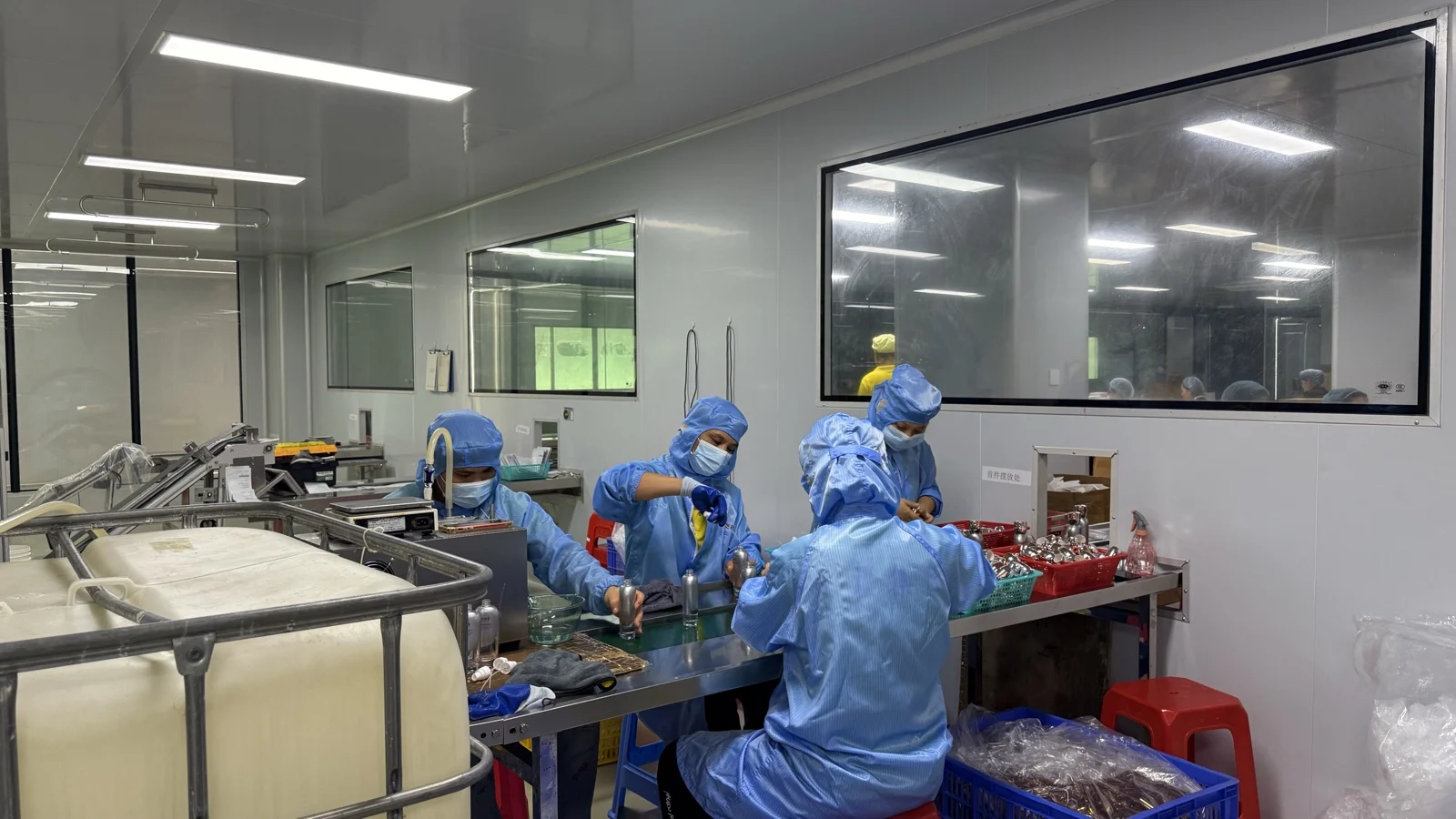
A cosmetic contract manufacturer is a factory that produces beauty products on behalf of a brand, handling everything from formula development to finished, packaged goods ready for sale. Most of the capacity serving international beauty brands sits in China, which makes vetting a China factory the practical version of this question rather than a separate one. When a brand searches for a contract manufacturer, it is almost always because they want a partner to build and produce a product for them, not merely fill bottles with a stock formula. That distinction matters, because the strongest contract manufacturers operate as full-service partners rather than pure production lines.
In practice, hiring a cosmetic contract manufacturer means outsourcing the technical and physical work of making a product while you keep control of the brand, the strategy, and the commercial decisions. You bring the vision, the target market, and the price point; the manufacturer brings formulation expertise, raw-material sourcing, quality systems, regulatory support, and the capacity to produce at scale. It is the model that lets a brand of any size access industrial-grade manufacturing without owning a factory.
This guide explains the full scope of what a contract manufacturer provides, how to evaluate one, the numbers to plan around, and the questions that reveal whether you are dealing with a genuine development partner or a broker. If you are still deciding between full contract manufacturing, private label, and white label, our comparison of the three sourcing models draws the line between them first.
The Full Scope of Contract Manufacturing Services
The reason "contract manufacturer" is worth searching for specifically is that it implies the full stack of services, not a single step. A capable partner covers the whole journey from brief to shipped goods, which is exactly what a growing brand needs when it lacks an in-house lab and supply chain.
What a Full-Service Partner Handles
- Formula development or adaptation: building a formula from your brief, or tailoring a proven base to your target texture, actives, and price point.
- Raw-material sourcing: procuring ingredients against agreed specifications, with certificates of analysis for traceability.
- Stability and safety testing: accelerated stability studies, preservative-efficacy (challenge) testing, and packaging-compatibility checks so the product performs through its shelf life.
- Regulatory and compliance support: documentation for markets such as the US, EU, and ASEAN, which saves the cost and delay of assembling it alone.
- Packaging procurement and filling: sourcing components, then filling, assembling, and decorating the finished product.
- Quality control: incoming-material checks, in-process controls, and finished-product testing under a documented quality system.
- Scalable production: the capacity to run a first order and a much larger reorder off the same qualified lines.
Category coverage is easier to judge from finished work than from a service list. A surfactant line running a pH balanced refreshing body wash, an emulsion line running a silky repair shampoo, and a cold-blending station producing a grapefruit spa essential oil are three different setups, and a partner that quotes all three is telling you something concrete about line configuration.
When one partner handles all of this, you get a single point of accountability and far less coordination overhead. The alternative, stitching together separate formulators, testing labs, packaging suppliers, and fillers, is slower, costlier, and riskier for most brands.
Why Line Configuration Decides What a Factory Can Quote
Scope on a website is cheap. What sets the real limit is how a factory's lines are configured, because filling equipment is category-specific and not interchangeable. An emulsion line running creams and lotions cannot fill a sheet-mask sachet, and neither can fill an aerosol. This is the mechanical reason a supplier who says yes to every category is worth a second look, and it is why our 13 lines are split by dosage form rather than pooled.
Two consequences matter when you brief a contract manufacturer. First, ask which line your product would run on and what else runs on it, because that tells you the realistic minimum and where your order sits in the queue. Second, expect a changeover cost: switching a line between formats means cleaning validation between runs, which is exactly why a 500-unit trial order is quoted at a per-unit price that looks unreasonable. The cost is real, and it sits in the changeover rather than the ingredients.
Cleanroom class works the same way. A class 100,000 environment is what lets us fill categories with tighter microbial limits on the same site as general skincare, instead of subcontracting them out. When a factory cannot say which environment your product would be filled in, the honest reading is that it will be filled somewhere else.
One point of vocabulary before the assessment criteria, because it changes what you are grading. Contract manufacturing is the umbrella term for outsourcing production; OEM and ODM are specific arrangements inside that umbrella, separated by who develops the formula. Most real relationships blend them, and the distinction is a contract question rather than a capability question. Our OEM vs ODM guide works through formula ownership, cost, and exclusivity in full. This article stays on the capability question: how to tell whether a factory can actually make your product to a standard you can sell.
Not sure which route fits your product?
Send us your brief and our formulators will tell you what is realistic on formula, MOQ, and timeline before you commit to anything.
Where Cosmetic Contract Manufacturers Are Concentrated
Sourcing decisions usually come down to a region before they come down to a factory, because the region sets the cost base, the component ecosystem, and the compliance paperwork you will be handling. Cosmetics contract manufacturing is clustered in a handful of places, and each cluster has a different reason for existing.
- Guangdong, China. The largest concentration of cosmetics contract manufacturers globally, and the reason is component density rather than labour cost. Bottles, pumps, caps, cartons, and printing all sit within a short drive of the filling line, which is what makes a 20-35 day production cycle realistic and a custom packaging trial affordable. Our own facility is in Huadu District, Guangzhou, 110-115 km from Nansha Port and 21-23 km from Baiyun International Airport, so sea and air freight are both practical from one site.
- South Korea. Strong on formulation innovation and texture work, particularly in sheet masks and lightweight emulsions, at a higher unit cost and generally higher MOQ. Best fit when the formula itself is your differentiation. Our China vs Korea comparison covers the cost and capability trade-off in detail.
- Italy and France. Premium and prestige work, colour cosmetics, and fragrance, with the "Made in EU" origin claim that some positioning requires. Highest cost base of the major clusters.
- United States. Domestic production for US brands wanting shorter freight and no import step, now operating under MoCRA facility registration requirements. Component sourcing is less concentrated than in Guangdong, so custom packaging lead times tend to run longer.
The practical point is that the cluster you choose determines which compliance work lands on you. Producing in China for ASEAN markets means the factory's GMP certificate and Certificate of Free Sale feed directly into a BPOM or TFDA filing, and our guides to BPOM registration in Indonesia and TFDA registration in Thailand walk through what the manufacturer supplies versus what you file yourself.
When Contract Manufacturing Is the Right Choice
Contract manufacturing is not the only route to a product, so it helps to know when it is genuinely the best fit. It earns its place when you want a real product built to your specification and intend to grow a lasting brand, but do not want to build and run a factory.
- You want a differentiated product, not a generic item any reseller can also sell.
- You need technical capability you do not have in house, from formulation through testing and compliance.
- You plan to scale, and want a partner whose capacity grows with you rather than a supplier you outgrow.
- You value a single accountable partner over managing a chain of separate vendors.
If speed and lowest cost matter more than uniqueness for a particular product, private label or white label may fit that SKU better. Many brands mix approaches: private label for supporting lines and full contract manufacturing for the products that define them. Our private label cosmetics guide maps that middle route, and our guide to starting a private label skincare line shows how the pieces fit into a launch plan.
How to Evaluate a Cosmetic Contract Manufacturer
Choosing the right partner sets the ceiling on your product quality, reliability, and ability to scale. Work through these dimensions before you commit, and weigh the answers against each other rather than chasing the lowest quote.
The Dimensions That Matter
- Certifications and quality systems: confirm recognized credentials such as ISO 22716 (Good Manufacturing Practice for cosmetics) and GMPC, ideally with recent third-party audit reports you can review.
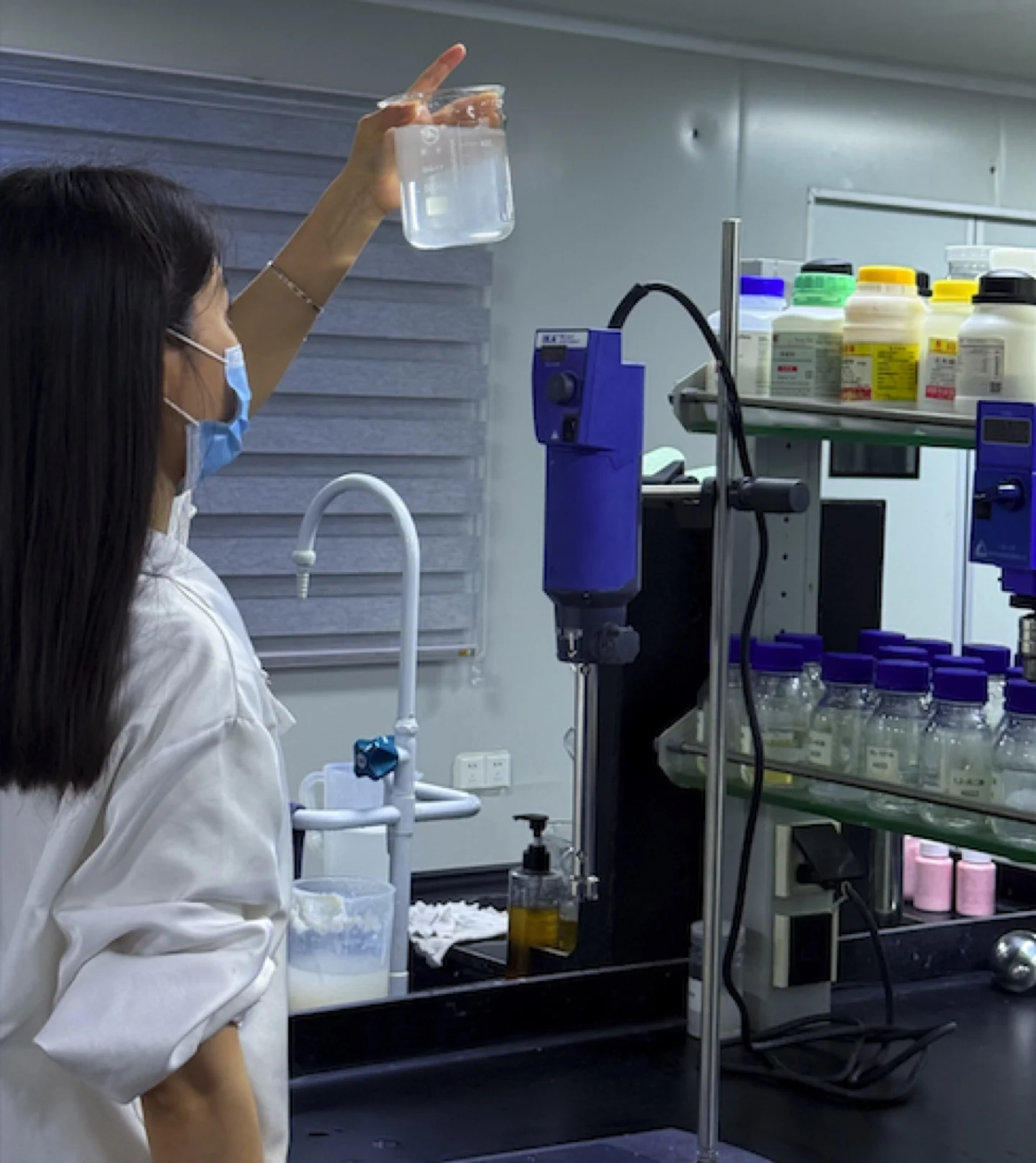
- Formulation capability: ask whether formulation happens in house and how many chemists are on the R&D team. In-house development means faster iteration and fewer communication gaps.
- Category experience: depth in your specific product type. A partner strong in emulsions is not automatically strong in color cosmetics or sun care.
- Capacity and scalability: enough headroom that your growth does not outstrip their lines, with consistent quality from first order to large reorder.
- Regulatory support: the ability to produce documentation for your destination market's registration.
- Transparency: clear MOQ, honest pricing, and openness to a factory visit or video walkthrough.
For a step-by-step vetting framework, including how to confirm a certificate is genuine and what to check on site, see our guide to choosing a cosmetics manufacturer in China. If your product is skincare specifically, our skincare manufacturer buyer's checklist adds the formulation and stability questions that category demands.
What Those Answers Look Like in Practice
Criteria are easier to apply against a concrete example, so here is how our own facility answers each one. Use the shape of these answers as a benchmark when you put the same questions to any supplier.
- Certifications: GMPC and ISO 22716, both certified by Intertek, with the certificates published as downloadable PDFs rather than described in prose. We also hold ISO 9001, ISO 14001, and ISO 45001, and our facility is registered with the US FDA under MoCRA as a cosmetic establishment (FEI 3038966060). The Intertek certificates can be verified directly at certs.intertek.com.cn; FDA registration means the facility is registered with and known to the FDA, not inspected or approved by it, and is renewed biennially. A registration number is checkable; a claim of "FDA approved" is not, and no cosmetics factory holds one.
- Formulation capability: an in-house R&D team of more than 50 people. The number matters less than what it enables: reformulation rounds handled internally instead of brokered out, and a chemist who can explain why an active level affects texture.
- Category experience: 20 product categories across skincare, body care, hair care, and aromatherapy since 2010. Breadth is only useful if it is paired with depth in the category you need, so ask which lines have run your product type at volume.
- Capacity and scalability: 13 production lines and 200,000+ units per day, with a class 100,000 cleanroom for the categories that require controlled filling. Headroom is what stops your reorder from being rescheduled behind a larger client's run.
- Supply chain depth: raw materials from BASF, Symrise, and Croda. Named tier-one suppliers can be verified and carry consistent documentation; unnamed "imported ingredients" cannot.
- Transparency: a video walkthrough of the production floor and factory visits, plus 25+ brand partners as reference points. Location matters commercially too: we are 110-115 km from Nansha Port and 21-23 km from Baiyun International Airport, which is what makes both sea and air freight practical from the same site.
None of these figures make a factory the right one for your project. They are the kind of specific, checkable claims a real manufacturer can produce on request, and their absence is the signal worth acting on.
MOQ, Pricing, and Lead Times to Plan Around
Commercial terms decide whether a partnership is workable at your stage, so plan against realistic ranges and confirm with a quote for your exact spec. Numbers move with formula complexity, packaging, and volume.
| Commercial term | Working range | What moves it |
|---|---|---|
| Minimum order quantity | 2,000–3,000 bottles or jars / SKU 5,000–10,000 sheets for masks |
Sachet filling is only economic in longer runs, which is why masks sit higher. Custom formulas and bespoke packaging raise the minimum, since tooling and raw-material minimums are set by the component supplier, not the filling line. |
| Per-unit pricing | $1.50–$3.50 for straightforward private label skincare | Active-rich formulas, complex packaging and full custom development all run higher. |
| Sampling lead time | 5–7 working days labelling an existing base 2–4 weeks if that base needs reformulating |
A formula developed from scratch runs longer again. |
| Production timeline | 35–45 days basic formats 45–55 days serums, creams, emulsions 10–13 weeks with custom tooling |
Covers procurement, bulk production, QC and finished-goods handling. Sunscreens and freeze-dried sets run longer again because of testing and lyophilisation. Tooling lead time sits with the component supplier. |
| Quote turnaround | 24 hours on a complete brief | What makes a quote slow is almost never the factory's response time, it is an incomplete brief. Send target market, claims, texture reference, packaging format and order volume together and you get a usable number in one round instead of four. |
Disclaimer: MOQ, pricing, and timeline ranges are estimates based on 2026 market conditions and vary with formula complexity, packaging, actives, and order volume. Contact us for a custom quote tailored to your product.
Treat a quote far below these ranges with caution; it usually signals a thinner formula, weaker QC, or costs that appear later. For a full budget breakdown by category, our MOQ and cost guide goes deeper.
Is Packaging Part of Contract Manufacturing?
Usually yes, but the boundary varies enough between factories that it is worth asking directly rather than assuming. "Contract packaging" is sometimes quoted as a separate service and sometimes bundled, and the difference shows up in your landed cost.
At the fuller end of the scope, the factory sources components, fills, decorates, assembles secondary packaging and ships you retail-ready units. At the narrower end, you supply components to the factory door and pay for filling only. Both are legitimate arrangements. The problem is a quote that does not say which one it is, because a filling-only price looks dramatically better than a full-scope price for reasons that have nothing to do with the factory being cheaper.
Three questions settle it. Who sources and pays for components, and are those minimums separate from your unit minimum. Who owns the compatibility testing between formula and container, which is a distinct step from formula stability and is frequently skipped. And who carries the risk if a component arrives out of specification mid-production, since that is where schedules break.
We quote packaging as part of scope rather than as an add-on, and we run compatibility testing in the actual component you intend to ship. Not because it is standard practice everywhere, but because the alternative is discovering an incompatibility after the batch exists.
What Separates a Real Partner From a Broker
Some outfits marketing themselves as contract manufacturers are intermediaries who outsource the actual production, adding cost and communication gaps. These positive signals tend to identify a genuine manufacturer with real capability.
- They interrogate your brief. A real partner asks about target market, claims, price point, and packaging before quoting, because those change the formula.
- They discuss trade-offs. "We can hit that active level, but it affects texture and cost" is the language of a formulator who has done it.
- They own their facility. They can host a visit or a live video walkthrough of the production floor rather than deflecting.
- They document. Certificates of analysis, stability data, and clear specifications arrive readily, not after repeated chasing.
- They back it with technology. Genuine R&D depth, such as our proprietary supramolecular transdermal delivery technology backed by multiple granted patents, points to a manufacturer rather than a reseller. Our technology page explains how it improves active delivery.
The specificity of the answers, not the polish of the website, tells you which you are dealing with. A capable partner welcomes hard questions; a broker deflects them.
Four Checks That Take Ten Minutes
Most of the vetting advice in this industry assumes you can visit the factory. Before you spend on a trip, these four checks are cheap and they filter out most intermediaries.
- Ask for the certificate file, not the certificate name. Anyone can type "ISO 22716 certified" on a page. A real holder can send the PDF, and the PDF carries a certificate number, an issuing body, a scope statement, and an expiry date. Check that the scope covers the product category you need and that the named entity matches the company you are quoting with. A certificate in a parent company's name does not cover a subcontracted line.
- Verify the registration independently. Where a public register exists, use it. A US FDA facility registration has an FEI number you can look up rather than take on trust, which is why ours is published as FEI 3038966060 instead of described as "FDA registered". Any claim that cannot be checked against a third party should be treated as marketing.
- Ask what the factory cannot do. This is the most useful question in the whole process and the hardest to fake. A factory with 13 lines still has categories it will decline, and a formulator will name them quickly and explain why. A broker either accepts everything or goes vague, because its answer depends on which subcontractor picks up the job.
- Ask for a live walkthrough, unscripted. Not a produced video, a phone call from the floor. Ask to see the line your product would run on, the raw-material store, and the QC bench. Someone standing in their own facility can do this in ten minutes; an intermediary needs to schedule it, because they need to arrange access to a building they do not control.
None of this guarantees a good outcome, and a factory can pass all four checks and still be wrong for your product. What these checks do is separate the suppliers who own their capability from the ones who resell someone else's, and that distinction is what determines who is accountable when a batch fails.
What the US Registration Numbers Do and Do Not Prove
Since MoCRA took effect, facility registration has become a standard line in supplier presentations, and it is routinely oversold. The statute itself sets narrow limits on what those numbers mean, and reading it changes which documents you should bother asking for.
A contract manufacturer needs only one registration, however many brands it serves. Under 21 U.S.C. 364c(a)(3), where a facility processes products on behalf of responsible persons, the Secretary requires "only a single registration for such facility even if such facility is manufacturing or processing its own cosmetic products or cosmetic products on behalf of more than one responsible person." A factory serving forty brands and a factory serving one carry the same kind of registration. So "we are registered, and we produce for established US brands" tells you nothing about how those brands were handled. The registration is a property of the building, not a record of performance.
Product listing numbers are not public, by statute. Section 364c(d) directs the Secretary to assign a facility registration number and a product listing number for each product, then states plainly: "The Secretary shall not make such product listing number publicly available." A facility registration number, in contrast, is the one you can work with. If a supplier offers a product listing number as proof that a particular product is cleared for the US market, the number cannot be checked against any public register, because no such register exists for it. Treat it as an internal reference, not evidence.
Confidentiality runs further than most buyers expect. Under 364c(e), the brand-owner information and ingredient details submitted with a registration or listing are withheld from Freedom of Information Act requests. You cannot file a request to discover which brands a factory produces for, and neither can your competitors discover yours. This cuts both ways: it protects your programme, and it means a client list can never be verified through official channels. Ask for referenceable customers directly instead.
The practical consequence is narrow but useful. Ask for the facility registration number, check it, and treat it as confirmation that the plant is known to the FDA and subject to suspension under 364c(f) if a product it makes is found likely to cause serious harm. Then stop. Registration is not inspection, listing numbers are not credentials, and neither substitutes for the responsible person obligations that stay with your company. The filing sequence itself, and which obligations stay with your company as the responsible person, are set out in our MoCRA compliance guide.
Capability Gaps That Surface After You Sign
The checks above catch intermediaries. A different set of problems only appears once production starts, and they come from capability gaps rather than dishonesty. These are the ones worth asking about while you still have leverage.
- No stability programme, only a stability claim. Ask what conditions the accelerated study runs at and for how long, and ask to see a report for a comparable product. A factory doing this properly runs the packaging in the study too, because a formula that is stable in a beaker can still fail in the pump you chose.
- Regulatory documentation that stops at the certificate. Producing a batch is not the same as producing a registration dossier. Ask specifically which destination markets they have filed for and what the client had to supply themselves. A partner that has handled ASEAN notifications knows that a Certificate of Free Sale and a GMP certificate are separate documents with separate lead times; one that has not will discover this alongside you.
- Scale-up treated as a formality. A formula that works at 5 kg on a bench does not automatically work at 500 kg in a vessel, because heat transfer and shear are different at scale. Ask whether the bench sample you approve is made on lab equipment or on a pilot line, and what happens to your timeline if the first production batch does not match the sample.
- Single-source raw materials with no alternate qualified. If a hero active comes from one supplier and that supplier has a shortage, your reorder waits. Ask whether alternates are qualified for the key materials, and accept that for some patented actives the honest answer is no.
- Quality systems that exist on paper only. A documented system is auditable: batch records, deviation reports, retained samples with defined retention periods. Ask how a deviation was handled recently and what changed afterwards. A real system produces a specific answer; a paper one produces reassurance.
Raising these before a contract is signed is not adversarial and a capable partner will not read it that way. The questions that make a supplier uncomfortable are usually the ones that would have cost you a production run.
Questions to Ask Before You Sign
Bring these to your shortlist. The clarity of the answers will rank your candidates faster than any brochure.
- Do you formulate in house, and how many chemists are on your R&D team?
- Which certifications do you hold, and can I see recent audit reports?
- What is your realistic MOQ and per-unit price for my exact spec and packaging?
- What stability and safety testing do you run, and can I see a sample report?
- What is the honest timeline from approved formula to delivered goods?
- Can you provide documentation for my target market's registration?
- Do you own the production facility, and can I visit or see a live walkthrough?
Frequently Asked Questions
What is a cosmetic contract manufacturer?
A cosmetic contract manufacturer is a factory that produces beauty products on behalf of a brand, typically handling formula development or adaptation, raw-material sourcing, testing, regulatory documentation, packaging, filling, and quality control. The brand keeps ownership of the brand and strategy while the manufacturer provides the technical and production capability.
Is a contract manufacturer the same as OEM?
Not exactly. Contract manufacturing is the broad category of outsourcing production, while OEM and ODM are specific arrangements inside it, separated by who develops the formula. For how contract manufacturing, private label, and white label differ on formula ownership and exclusivity, see our comparison of the three models.
What is the minimum order for contract manufacturing cosmetics?
2,000–3,000 bottles or jars per SKU is the working baseline for most skincare and body care on stock packaging, which is where the industry generally sits. Sheet masks run higher at 5,000–10,000 sheets per SKU because sachet filling is only economic in longer runs. Fully custom formulas and bespoke packaging raise the minimum, since tooling and raw-material minimums are set by component suppliers rather than the filling line. Confirm against your exact spec.
How long does contract manufacturing take?
Labelling an existing private label base can put samples in your hands in 5-7 working days; reformulating that base runs closer to 2-4 weeks. Production after sample approval is 35–45 days on stock packaging for basic formats, 45–55 days for serums and creams, stretching to 10–13 weeks when custom components need tooling. Developing a formula entirely from scratch, including stability testing, takes considerably longer. Build these windows into your launch plan.
How do I choose the right cosmetic contract manufacturer?
Verify certifications such as ISO 22716 and GMPC, confirm in-house formulation and category experience, check capacity and scalability, and require transparent MOQ and pricing. Ask whether they own their facility and welcome a visit. Weigh these factors together rather than choosing on price alone.
How can I tell a real cosmetic manufacturer from a trading company?
Ask for the certificate PDF rather than the certificate name, and check that the certificate number, issuing body, scope, and named entity match the company quoting you. Then ask what the factory cannot produce. A manufacturer names its declined categories quickly and explains the equipment reason; an intermediary either accepts everything or stays vague, because its answer depends on which subcontractor takes the job. A live unscripted walkthrough from the production floor is the fastest confirmation.
Does a cosmetic contract manufacturer handle packaging?
Usually yes, as procurement plus filling and assembly, but the design and tooling responsibility is worth pinning down in writing. Sourcing stock components from an existing catalog is routine. Custom components mean a mould, and that lead time and cost sit with the component supplier rather than the filling line, which is why custom packaging moves a project from roughly 35–45 days to 10–13 weeks.
Do I need my own formula to use a contract manufacturer?
No. If you have a formula, the factory produces it as an OEM arrangement. If you do not, you either adapt a proven base to your target texture, actives, and price point, or have a formula developed from your brief. Adapting an existing base is faster and cheaper and covers most launches; full development makes sense for a hero product you intend to differentiate on.
Who is legally responsible for the finished product?
In most markets the brand placing the product on the market is the responsible party, not the factory, even though the factory holds the manufacturing standard. The manufacturer supplies the technical file inputs, certificates of analysis, stability data, and GMP evidence you need for registration, while filing and the legal responsibility for claims stay with you or your local representative. Confirm which destination markets your partner has actually filed documentation for, since that experience is what makes the paperwork move.
Choosing a Partner You Can Grow With
A cosmetic contract manufacturer is more than a production line; the right one is the technical backbone of your brand, covering formulation, testing, compliance, and manufacturing under one accountable roof. Choose on capability, transparency, and category fit rather than on the lowest quote, and you turn a risky search into a partnership that scales with you.
If you would like a straight assessment of fit, MOQ, cost, and timeline for your specific product, request a quote and we will walk through it with you.
Looking for a Cosmetic Contract Manufacturer?
As a GMPC and ISO 22716 certified Guangzhou manufacturer operating since 2010, we provide full-service contract manufacturing across skincare, color, sun, body, and hair care, with in-house R&D and flexible MOQ from 1,000 units. Tell us your product and we will map the fastest route to market.
Ready to Start Your Project?
Tell us your product requirements. Our technical team responds within 24 hours with a detailed quotation.