
Private Label Cosmetics: The Complete Launch Guide
What Private Label Cosmetics Actually Means (and What It Doesn't)
Private label cosmetics is the practice of selling products made by a manufacturer under your own brand name, using a formula the factory has already developed and tested. You supply the brand, the packaging direction, and the market strategy; the manufacturer supplies the proven formula and the production. It is the route most independent beauty brands take to reach shelves without building a lab of their own, and it is why a founder with a strong brand idea can launch a credible product line in months rather than years.
The term gets stretched in everyday use, so it helps to be precise. Private label sits between two neighbors. On one side is white label, where you sell a generic product exactly as it comes, with nothing changed but the label. On the other is full custom development, where a formula is built for you from a blank sheet. Private label is the productive middle: a tested base you can adjust within limits, brand as your own, and in many cases hold exclusively if you negotiate for it. That middle ground is what makes it the workhorse model of the beauty industry.
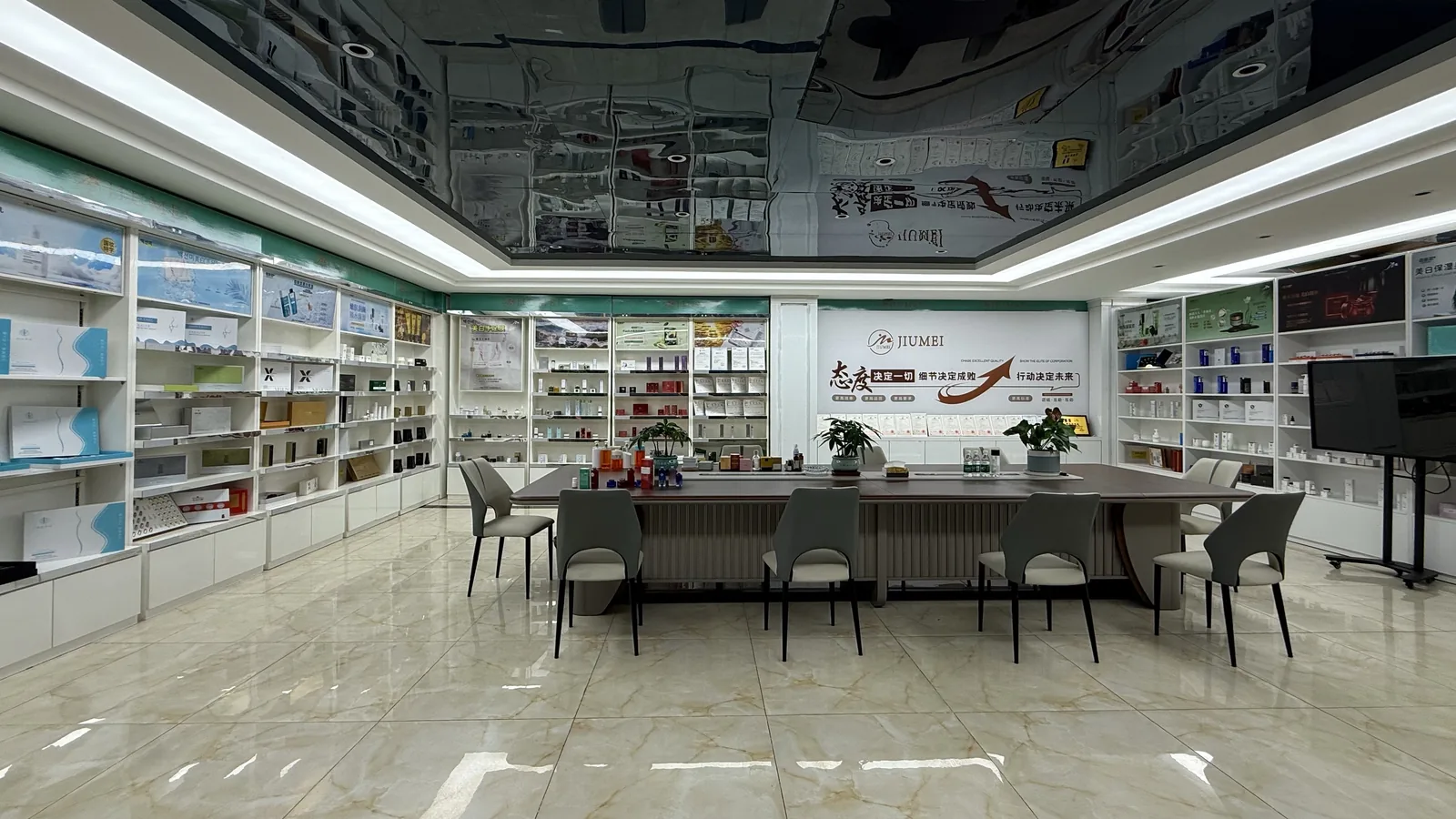
This guide is the map for the whole subject. It covers which products you can private label, who the model suits, what it costs, how the journey from idea to shelf actually runs, and how to pick a manufacturer that helps you build a brand rather than a lookalike. Where a topic deserves its own deep dive, we link to a focused guide so you can go as deep as you need without losing the thread here.
Which Product Categories You Can Private Label
One reason private label cosmetics scales so well is breadth. Almost every category a modern beauty brand sells can be produced this way, which lets you launch a focused hero product and expand into a full range with the same partner. The trade-off is that each category carries its own manufacturing demands, so a factory strong in one is not automatically strong in another.
The Categories Brands Launch Most Often
- Skincare: serums, moisturizers, cleansers, essences, and treatments. The largest and most competitive category, and the one where formulation depth matters most because actives have to stay stable through shelf life. That is the main argument for starting from a base that has already been through stability testing - a multi-active formula such as our glutathione brightening serum is the kind of starting point that removes that risk from your first run. Our skincare manufacturer buyer's checklist covers the chemistry-specific questions to ask.
- Color cosmetics and makeup: lipsticks, foundations, pressed powders, and palettes. Here pigment consistency, texture, and packaging engineering carry the product more than active chemistry.
- Sun care: SPF products carry heavier regulatory and testing requirements than most categories, which is why brands often start from a tested base such as our daily aqua sunscreen SPF30 rather than developing SPF from scratch. For hot, humid markets the formulation bar is higher again, which we cover in our sunscreen OEM guide for Southeast Asia.
- Sheet masks and treatments: a fast-moving, gift-friendly category with relatively accessible entry points. See our private label sheet mask manufacturing guide for MOQ and material options.
- Body and hair care: body lotions, washes, shampoos, and scalp treatments. Often the most cost-efficient category to start with, and a natural way to broaden a range. Our hair and body care OEM guide maps the options.
The practical lesson is to match your priority product to a manufacturer with genuine depth in that category, then use the same partner's breadth to grow. A factory that produces skincare, color, sun, body, and hair care under one certified roof saves real friction as your catalog expands. On the skincare side, it also helps to know the documents you receive at each stage, since that paperwork is what your target market's regulator will ask for.
The Full Category Map: What We Actually Run
The list above covers where most brands start. In practice a private label range is built subcategory by subcategory, and each one carries its own minimum order quantity and production window because the filling equipment and the testing requirement differ. Below is the full map of what runs on our lines, with the real numbers rather than a generic "low MOQ" claim. Bottles, jars, tubes and sheet material are counted in their own units, which is why the figures are not interchangeable.
Facial skincare
- Cleansers (5 formulas): 2,000-3,000 bottles per SKU, 35-45 days. Amino acid surfactant systems, cleansing creams and foaming bases.
- Toners and essence waters (6 formulas): 2,000-3,000 bottles per SKU, 35-45 days. The fastest category to launch because the base is a water system with no emulsion to stabilise.
- Serums (6 formulas): 2,000-3,000 bottles per SKU, 45-55 days. The extra weeks are stability testing on the active system, not queue time.
- Essence lotions (5 formulas): 2,000-3,000 bottles per SKU, 45-55 days. A lighter emulsion sitting between serum and cream, popular in humid markets where a full cream feels heavy.
- Face creams and moisturisers (7 formulas): 2,000-3,000 jars per SKU, 45-55 days. Includes gel-cream versions of most bases for hot climates.
- Sun care (8 formulas): 2,000-3,000 bottles per SKU, 45-60 days including stability and SPF testing. This window cannot be compressed - the SPF test is a fixed external step.
- Sheet masks (7 formulas): 5,000-10,000 sheets per SKU, 45-55 days. Counted in sheets, not units, because the substrate is bought by the roll.
- Collagen patches and hydrogel (5 formulas): 5,000-10,000 sheets per SKU, 45-55 days. A differentiated format most private label ranges skip.
Body care
- Body lotions (7 formulas): 2,000-3,000 bottles per SKU, 35-45 days.
- Body washes (5 formulas): 2,000-3,000 bottles per SKU, 35-45 days. Usually the lowest cost per unit in a starter range.
- Body scrubs (7 formulas): 2,000-3,000 jars per SKU, 35-45 days. Jar-filled because of the exfoliant load.
- Shaping and firming care (5 formulas): 2,000-3,000 tubes per SKU, 45-55 days.
- Herbal care liquids (5 formulas): 2,000-3,000 bottles per SKU, 45-55 days.
Hair care
- Shampoos (6 formulas): 2,000-3,000 bottles per SKU, 35-45 days.
- Conditioners (5 formulas): 2,000-3,000 bottles per SKU, 35-45 days.
- Hair masks (5 formulas): 2,000-3,000 jars per SKU, 35-45 days.
Aromatherapy and specialty
- Essential oils (5 formulas): 1,000-2,000 bottles per SKU, 35-45 days. The lowest MOQ on our lines, which makes it a common first SKU for spa and clinic brands.
- Fragrance (5 formulas): 1,000-2,000 bottles per SKU, 45-55 days.
- Freeze-dried serum sets (5 formulas): 3,000-5,000 sets per SKU, 50-70 days. The longest window on our lines because the lyophilisation cycle and the two-part packaging are both fixed steps.
Two patterns are worth reading off that list before you choose a first product. Water-based formats - toners, cleansers, shampoos, body washes - run on the shorter 35-45 day window because there is no emulsion or active system that needs a stability hold. Anything with an emulsion, an active at a functional level, or an external test attached to it sits at 45-55 days or longer. If your launch date is fixed, that difference is usually more decisive than the price per unit.
Not sure which route fits your product?
Send us your brief and our formulators will tell you what is realistic on formula, MOQ, and timeline before you commit to anything.
Private Label vs Other Sourcing Routes: A Quick Orientation
Before you commit, it helps to place private label against the alternatives so you name the model you actually need. This is the short orientation; for a full side-by-side on ownership, speed, cost, and exclusivity, our comparison of contract manufacturing, private label, and white label goes into depth.
- White label is the fastest and cheapest, but the product is generic and shared. You compete on brand and price alone, with nothing stopping a rival from selling the identical item. We break down how this works in practice in our guide to white label skincare.
- Private label gives you a proven, testable product you can customize within limits and, with negotiation, hold exclusively. It balances speed against a defensible brand.
- Contract manufacturing with a custom formula offers the strongest differentiation and the deepest moat, at the cost of more time, budget, and higher minimums. When you are ready for a formula that is genuinely yours, our guide to cosmetic contract manufacturers explains what a full-service partner provides.
Most brands do not pick one lane for life. A common and sensible path is to launch supporting SKUs on private label to keep costs controlled, then invest custom development into the hero product that defines the brand. If you are weighing who develops the formula in the first place, our breakdown of OEM versus ODM manufacturing settles the ownership question.
Who Private Label Cosmetics Is Right For
Private label is not a compromise route; for a large share of successful brands it is the correct strategic choice. It fits best when your competitive edge lives in brand, audience, and distribution rather than in a novel molecule.
- First-time brand owners who need a credible line without the cost, time, and risk of custom formulation.
- Creators and retailers with an audience who can sell effectively and want product to match their reach quickly.
- Established brands testing a new category before committing R&D budget to a proprietary formula.
- Brands building a range where hero products justify custom work but supporting SKUs are perfectly well served by a strong standard base.
If your entire value proposition depends on a formula no one else can offer, private label alone will not carry you and you should plan for custom development. For most brands, though, the formula is the enabler and the brand is the business. That is exactly the situation private label is built for.
What It Costs to Launch: Ranges and Drivers
Cost is where plans meet reality, so treat these as planning ranges and get a quote against your actual spec. Private label is far more affordable than custom development, but the numbers still move with category, formula, and packaging.
The Numbers to Plan Around
| Line item | Planning range | What pushes it up |
|---|---|---|
| Minimum order quantity | From 1,000 units per SKU for entry-level private label with some partners; 3,000 units per SKU is the more common baseline | Specialized packaging and heavier customization |
| Per-unit price, straightforward skincare | Around $1.50 to $3.50 per unit | Active-rich serums and treatments, premium packaging |
| Packaging | Routinely underestimated as a line item | Custom components, airless pumps, decoration — each adds cost and lead time |
| Compliance and registration | Varies widely by country | The documentation and testing your target market requires |
- Minimum order quantity: flexible MOQ from 1,000 units per SKU is achievable with some partners for entry-level private label, with 3,000 units per SKU the more common baseline as customization increases. Specialized packaging and heavier customization push minimums higher.
- Per-unit pricing: private label skincare commonly lands around $1.50-$3.50 per unit for straightforward products, with active-rich serums, treatments, and premium packaging running higher.
- Packaging: often an underestimated line item. Stock packaging keeps cost down; custom components, airless pumps, and decoration add both cost and lead time.
- Compliance and registration: budget for the documentation and testing your target market requires, which varies widely by country.
Disclaimer: MOQ and pricing ranges are estimates based on 2026 market conditions and vary with formula complexity, packaging, actives, and order volume. Contact us for a custom quote tailored to your product.
For a category-by-category breakdown of order minimums, unit economics, and the hidden costs first-time brands miss, our private label MOQ and cost guide works through the full budget.
MOQ by Dosage Form, Not by Slogan
Most manufacturer sites answer the MOQ question with a single number or avoid it entirely. It cannot honestly be one number, because the constraint is the filling line and the packaging supply chain rather than the formula. These are the tiers we actually quote against, and they apply per SKU - meaning per formula per size per packaging choice, not per order.
- Bottled products (toners, serums, essence lotions, cleansers, body lotions, body washes, shampoos, conditioners, sun care): 2,000-3,000 bottles per SKU.
- Jarred products (face creams, body scrubs, hair masks): 2,000-3,000 jars per SKU.
- Tubed products (shaping and firming care): 2,000-3,000 tubes per SKU.
- Sheet material (sheet masks, collagen patches): 5,000-10,000 sheets per SKU, because the nonwoven or hydrogel substrate is purchased by the roll and cutting a part roll wastes more than it saves.
- Essential oils and fragrance: 1,000-2,000 bottles per SKU - the lowest entry point on our lines.
- Freeze-dried sets: 3,000-5,000 sets per SKU.
The practical consequence for a first order is that a three-SKU launch is not three times one MOQ if the three products share a packaging format and a filling line. Where it does multiply is across formats: a toner, a cream and a sheet mask are three different lines and three different minimums.
Production Windows: Where the Weeks Actually Go
Lead time is the number most often quoted loosely and then missed. Ours is tiered by what the formula requires, and the tiers exist because of testing, not scheduling:
- 35-45 days - water-based and simple emulsion products: toners, cleansers, shampoos, conditioners, body washes, body lotions, body scrubs, hair masks, essential oils. Accelerated stability testing runs inside this window in parallel with packaging procurement.
- 45-55 days - serums, face creams, essence lotions, sheet masks, collagen patches, fragrance, shaping care and herbal liquids. The additional time is a stability hold on the active or emulsion system before production is released.
- 45-60 days - sun care, including stability and SPF testing. The SPF test is performed externally and cannot be shortened by paying more.
- 50-70 days - freeze-dried serum sets, where the lyophilisation cycle and two-part packaging assembly are both fixed steps.
Real-time oxidation studies, if your registration dossier requires them, are quoted and scheduled separately from these windows.
What We Can Tell You About the Factory Itself
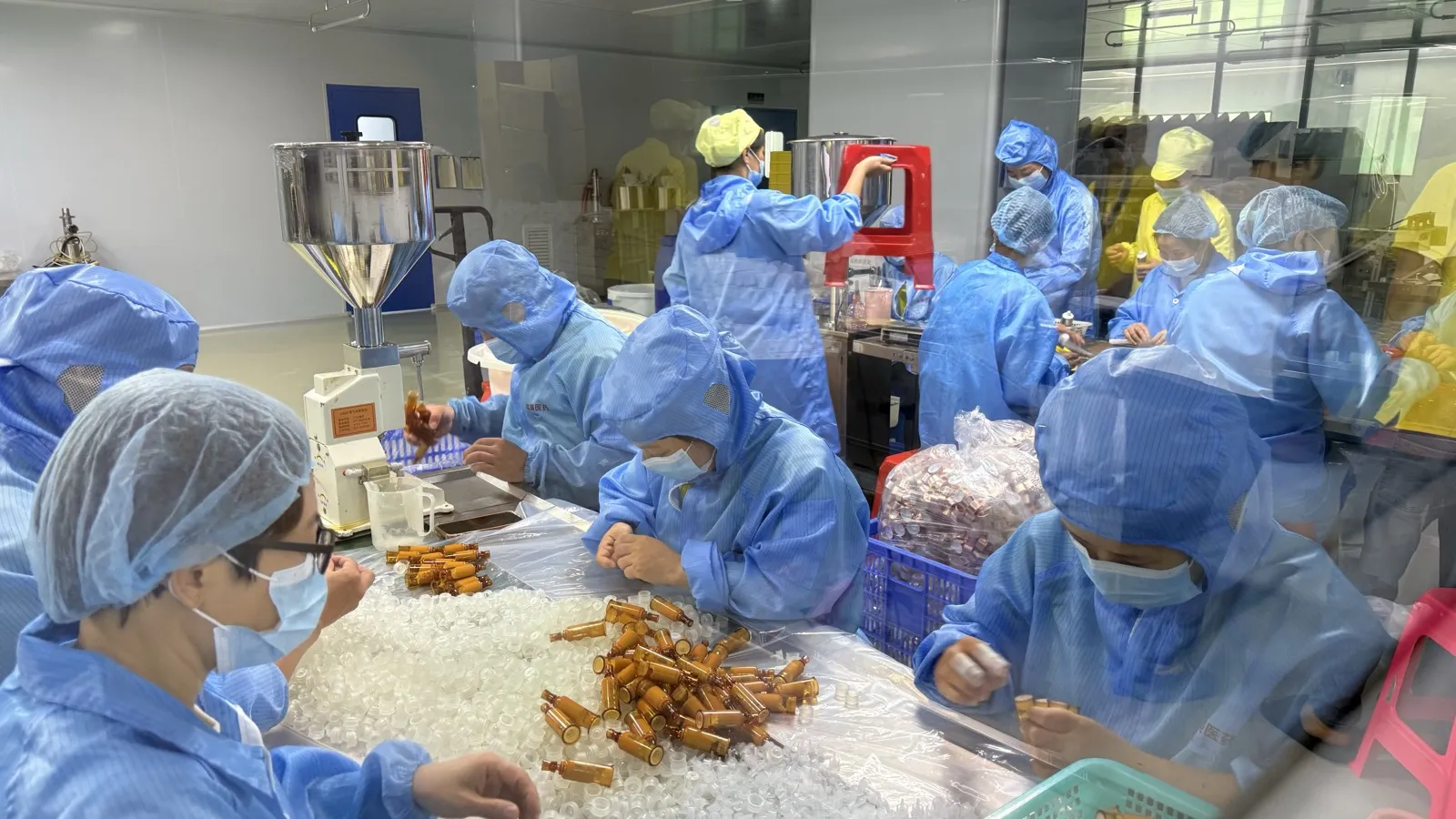
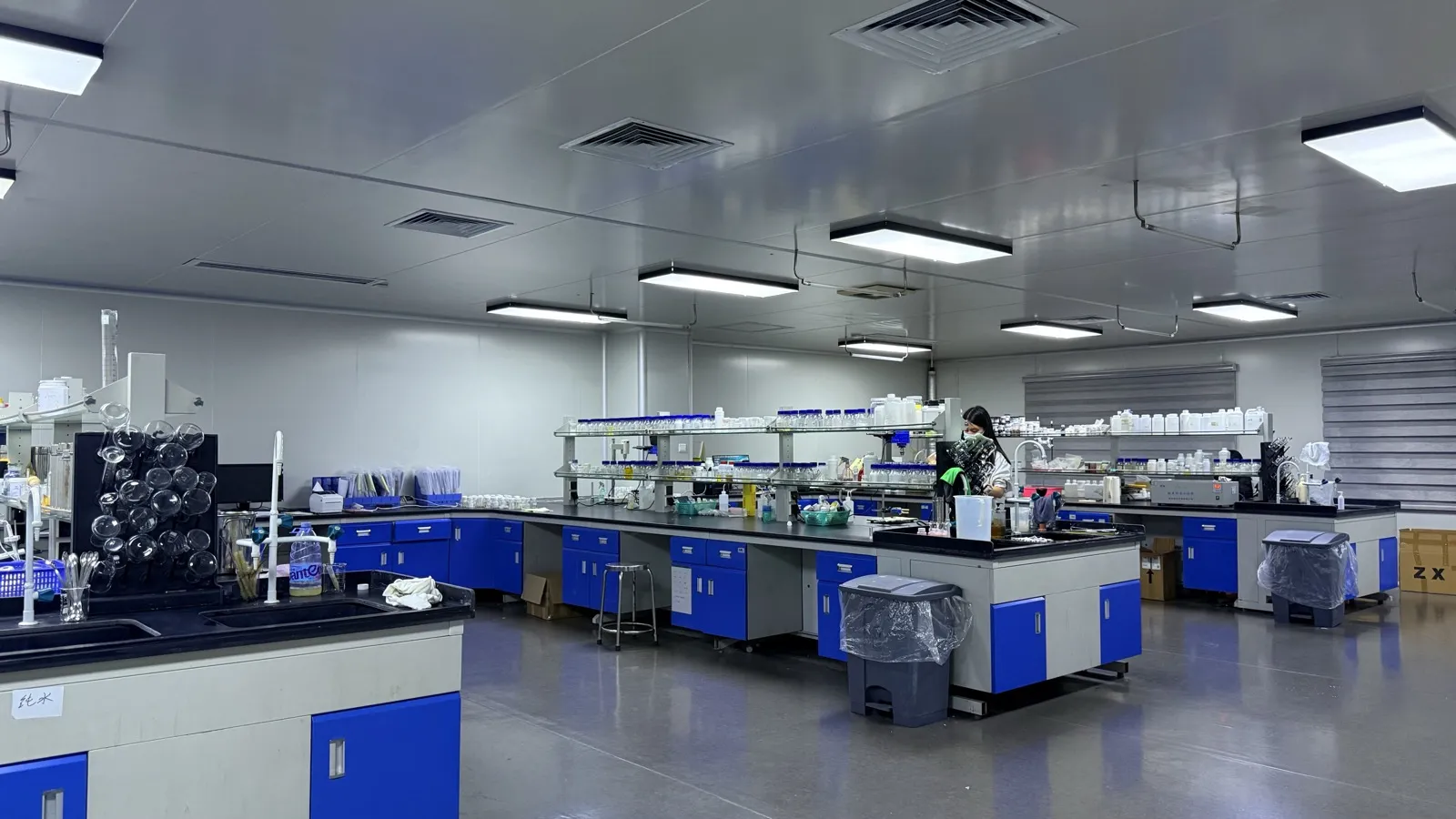
Cost and lead time only mean something against a real production base, so the relevant facts are these. We have been manufacturing since 2010, run 13 production lines with capacity for roughly 200,000 units per day, and operate from Huadu District, Guangzhou. The site holds ISO 22716 and GMPC certification, with third-party testing through Intertek available on request, and we currently ship to more than 25 countries. Those are the numbers that determine whether a quoted 45-day window is realistic or optimistic.
The Path From Idea to Shelf
The journey from concept to a product customers can buy follows a consistent arc, whatever the category. Here is the shape of it, so you know what to expect and where the time goes. For a step-by-step walkthrough with a skincare focus, our guide to starting a private label skincare line expands each stage.
The Stages in Order
- Position the brand: define who you serve, the promise you make, and the price the market will bear. This brief shapes every decision that follows.
- Select products and a base formula: choose from the manufacturer's tested catalog, then decide what to customize within the model's limits.
- Sample and refine: expect roughly 2-4 weeks to customize an existing base. Evaluate texture, performance, and how the formula behaves in its actual packaging.
- Lock packaging and design: confirm components, artwork, and decoration. This stage often controls the critical path.
- Handle compliance: assemble the safety assessments, ingredient disclosures, and registration your market requires.
- Produce and ship: plan for approximately 10-13 weeks from confirmed order to shipment once formula and packaging are locked, covering procurement, bulk production, QC, and finished-goods handling.
The single biggest schedule risk is packaging, not formula. Brands that lock artwork and components early tend to hit their launch dates; those that leave decoration decisions late tend to slip.
Registration and Compliance: What Your Factory Has to Supply
A private label brand does not get to outsource regulatory responsibility, but it does depend on the factory for the documents that make registration possible. Knowing which side owns what prevents the most common launch delay, which is a product that is manufactured and labelled before anyone checked what the destination market requires on the carton.
Across Southeast Asia the framework is the ASEAN Cosmetic Directive, implemented through a notification rather than a pre-market approval. That distinction matters: notification is faster, but it puts the burden of a compliant formula and a compliant label on you and your manufacturer rather than on a reviewing authority. Market by market, the practical entry points are:
- Indonesia - BPOM notification (locally, notifikasi kosmetik). Requires an Indonesian licence holder, and the factory must supply GMP evidence and formula documentation. Our BPOM registration guide covers the document set and timeline. Note that halal certification becomes mandatory for cosmetics from 17 October 2026, which affects ingredient choices made now.
- Thailand - Thai FDA notification, covered in our TFDA cosmetics registration guide. Sun care carries additional requirements here.
- Philippines - FDA Philippines requires a Certificate of Product Notification and a local licence holder. See our Philippine FDA guide.
- Vietnam - product declaration through the Drug Administration of Vietnam. Local buyers search for this work as gia cong my pham, usually alongside a GMP requirement. Our Vietnam market and registration guide covers both.
- Malaysia and Singapore - NPRA notification in Malaysia, where own-brand manufacturing is described locally as jenama sendiri. Our Malaysia and Singapore guide compares both routes.
The wider regional picture, including which documents transfer between markets and which have to be produced separately, is in our ASEAN Cosmetic Directive guide. For Europe and the United States the model is different again - a Responsible Person and a CPSR in the EU, and facility registration and product listing under MoCRA in the US, both of which we cover separately.
What we supply on our side is consistent across markets: GMP and ISO 22716 certification, full formula disclosure with INCI listing and percentages for the dossier, certificates of analysis, stability data, and safety documentation for the ingredients used. What you own is the licence holder in the destination country, the label artwork, and the claims made on it - and claims are where most rejections originate, not chemistry. Which words are safe to print varies by market, and getting it wrong can turn a legal cosmetic into an unapproved drug; our guide to cosmetic claims compliance across the US, EU and China maps what each market polices.
Choosing a Private Label Cosmetics Manufacturer
Your manufacturer is the single most consequential decision in the whole process, because it sets the ceiling on quality, reliability, and how far you can scale. The essentials to verify are consistent across categories.
- Certifications: confirm recognized quality-management credentials such as ISO 22716 (Good Manufacturing Practice for cosmetics) and GMPC, backed by documentation your market accepts.
- Category depth: real experience in your specific product type, not a generic willingness to make anything.
- Customization scope and exclusivity: what you can actually adjust, and whether you can hold a formula exclusively.
- Transparent terms: clear MOQ, honest pricing, and no hidden costs that surface later.
- Communication and reliability: responsiveness and documentation discipline that predict a smooth production run.
For a full vetting framework, including how to verify a certificate is genuine and what on-site checks back it up, see our guide to choosing a cosmetics manufacturer in China.
How to Build a Brand That Isn't a Commodity
The honest limitation of private label is that a base formula can be shared, so differentiation has to come from how you build the brand around it. This is where founders win or lose, and it is entirely within your control.
- Negotiate exclusivity on hero SKUs. You do not need every product exclusive, but locking your signature formula stops direct copies where it matters most.
- Customize meaningfully. Adjust the active level, fragrance, texture, or a hero ingredient within the model's limits so the product is recognizably yours.
- Choose a partner with genuine technology. A manufacturer with real formulation capability, such as our proprietary supramolecular transdermal delivery technology backed by multiple granted patents, gives you a performance story that a generic base cannot match. Our technology page explains how it improves active delivery.
- Own the brand experience. Packaging, story, content, and community are yours alone and are what customers ultimately buy into.
Treat the formula as the foundation and the brand as the building. Private label gives you a strong foundation at a fraction of the cost; what you build on top is what makes it defensible.
Frequently Asked Questions
What is the difference between private label and white label cosmetics?
White label means selling a generic product as-is with only your label added, shared with any other reseller. Private label means branding a manufacturer's tested formula that you can usually customize within limits and, with negotiation, hold exclusively. Private label offers more differentiation; white label offers more speed and lower cost.
How much does it cost to start a private label cosmetics brand?
It varies with category, formula, and packaging. Per-unit pricing for straightforward private label skincare commonly runs around $1.50-$3.50, with MOQ from 1,000 units per SKU achievable for entry-level products and 3,000 units per SKU a more common baseline. Add packaging and market registration to build a realistic first-order budget, and request a quote against your exact spec.
Can I customize a private label cosmetics formula?
Usually yes, within limits. Most private label programs allow adjustments to fragrance, color, active levels, and packaging, and many offer exclusivity on request. The degree of customization is something you negotiate rather than a fixed rule, so confirm scope with your manufacturer before committing.
How long does it take to launch a private label cosmetics product?
Customizing an existing base typically yields samples in about 2-4 weeks, with full production landing around 10-13 weeks from a confirmed order once formula and packaging are locked. Packaging decisions, not formulation, are the most common cause of delay.
Is private label cosmetics a good business model?
For most independent brands, yes. It removes the cost and risk of custom formulation while still allowing a credible, customizable, and potentially exclusive product. Its limitation is that base formulas can be shared, so your differentiation must come from brand, customization, and exclusivity rather than from owning a unique molecule.
Is there a private label option with no minimum order?
Not from a manufacturer that formulates and fills its own products, and it is worth understanding why before treating "no MOQ" as a feature. A production run has fixed costs - line changeover, cleaning validation, batch documentation - that do not shrink with order size, and packaging components are themselves bought at minimums. Suppliers advertising no minimum are generally reselling finished stock with a label applied, which is a legitimate model but a different one: you cannot change the formula, the packaging, or the scent. Our lowest genuine entry point is 1,000-2,000 bottles for essential oils and fragrance; for most skincare it is 2,000-3,000 units per SKU.
Can I start with one product instead of a full range?
Yes, and for a first launch it is usually the better decision. One SKU at a workable order quantity tells you more about your market than five SKUs spread thin, and it keeps your capital in stock that moves. The pattern that works is a hero product chosen for the format with the shortest lead time in your category, then expansion into adjacent formats on the same filling line once you have sell-through data. A toner or cleanser at 35-45 days gets you to market faster than a serum at 45-55, which matters more on a first order than the unit price difference.
What documents will I need from the factory to register my product?
For an ASEAN notification: GMP or ISO 22716 certification for the manufacturing site, the full formula with INCI names and percentages, a certificate of analysis for the batch, stability test data, and safety documentation for the ingredients. For sun care add the SPF test report. For a market requiring halal certification, that has to be arranged for the specific formula and site rather than assumed - it is not a document a factory either has or does not have across all products.
Turning the Model Into a Brand
Private label cosmetics is the most efficient way for an independent brand to reach shelves with a credible product: a tested formula, real customization, and the option of exclusivity, without the cost of building a lab. The model gives you speed and affordability; your brand, your customization choices, and your manufacturing partner decide how defensible the result becomes.
If you would like a straight assessment of category fit, MOQ, cost, and timeline for your specific product, request a quote and we will walk through it with you.
Ready to Build Your Private Label Line?
As a GMPC and ISO 22716 certified Guangzhou manufacturer operating since 2010, we produce skincare, color, sun, body, and hair care under one roof, with flexible MOQ from 1,000 units. Tell us your product vision and we will recommend the most efficient path to market.
Ready to Start Your Project?
Tell us your product requirements. Our technical team responds within 24 hours with a detailed quotation.